

Indian carriers look east to offset Gulf capacity losses

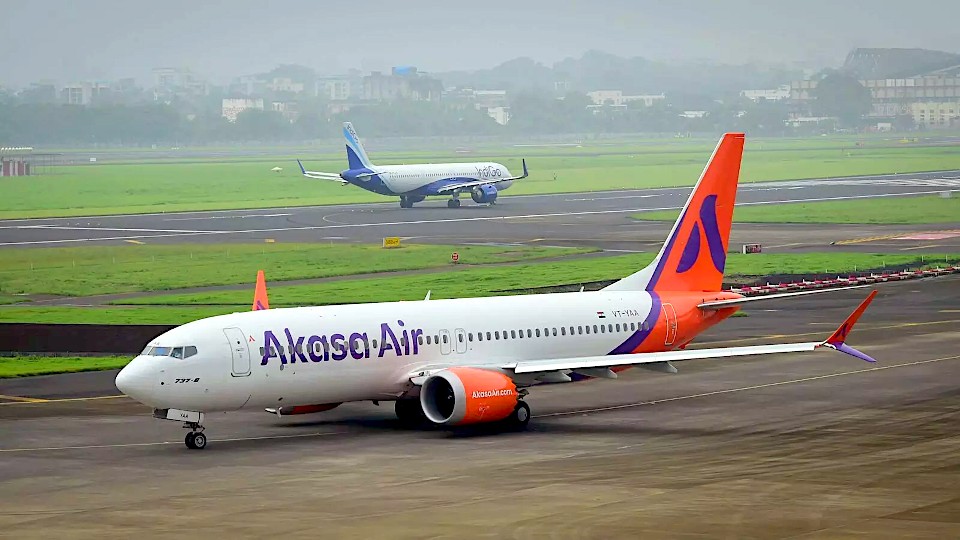
Dhaka: As Middle Eastern airspace remains restricted, Indian airlines are reshaping their summer schedules toward destinations in East and Southeast Asia and the Indian Ocean to offset losses from curtailed Gulf operations.
India's domestic carriers are expecting to face significant financial headwinds for the last fiscal year, FY26, driven by high aviation fuel prices, restricted Middle East schedules, and rupee depreciation.
Air India reported it incurred losses worth USD 2.4 billion during the period and has since sought fresh capital from Tata Group and Singapore Airlines.
Akasa Air recently announced a strategic push into Southeast Asia, adding the Vietnamese capital of Hanoi as its seventh international destination. The budget airline will operate four weekly nonstop flights between Mumbai and Hanoi starting September 4.
Air India will launch nonstop flights between Delhi and Hanoi beginning May 1, making it the carrier's second Vietnamese gateway after Ho Chi Minh City. The new service will run five times weekly, complementing daily flights to Ho Chi Minh City, adding 7,028 monthly seats to and from Vietnam.
Air India also announced nonstop flights between Mumbai and Tokyo's Haneda Airport from June 15, supplementing its existing Delhi–Haneda service.
IndiGo, meanwhile, is bolstering connectivity to Indian Ocean destinations in Sri Lanka and French overseas territory, Réunion Island.
The airline launched new direct flights between Delhi and Colombo. The service is operated six times a week.
India's largest airline now operates over 55 weekly flights to Colombo from five Indian cities — Mumbai, Bengaluru, Hyderabad, Chennai, and Delhi. It also connects Chennai and Tiruchirappalli to Jaffna with 10 weekly flights.
Additionally, IndiGo will operate thrice-weekly direct flights between Chennai and Réunion Island, effective April 29.
The eastward pivot reflects broader operational pressure stemming from airspace closures over the Middle East. Over 80% of Akasa Air's and Air India Express's capacity was previously deployed in Gulf markets, with IndiGo also maintaining a sizeable Middle East network.
V