


Regional air connectivity in Europe declines despite overall market growth

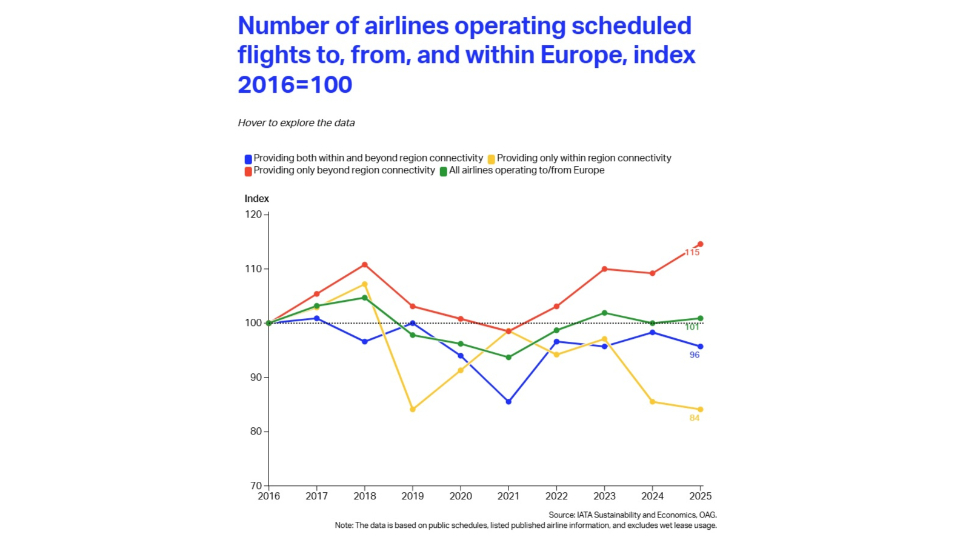
Dhaka: Air travel across Europe continues to expand, but connectivity within the region is increasingly under strain, as fewer airlines serve a growing number of routes.
Passenger traffic in Europe rose 26 percent in 2025 compared with 2016, supported by a network of around 22,000 routes. Long-haul connectivity has seen particularly strong growth, with more airlines operating flights beyond Europe and a sharp rise in routes to Asia-Pacific, the Middle East, and Africa.
However, the regional market tells a different story. While intra-European routes increased by 15 percent over the same period, the number of airlines operating them fell by nearly 9 percent. Carriers focused solely on European services have declined significantly, shrinking from their peak in 2018.
The shift means fewer airlines are now responsible for maintaining regional connectivity, raising concerns about service sustainability—especially on lower-demand routes.
Data shows that 91 percent of routes dropped from the 2025 schedule had fewer than 20,000 seats the previous year, highlighting the vulnerability of smaller, less profitable connections. These “thin” routes, often linking smaller communities, are the most at risk as costs rise and market conditions tighten.
Market consolidation has accelerated in recent years. Of the airlines that have exited Europe since 2016, nearly half ceased operations due to bankruptcy, while others shut down after restructuring or withdrew to focus on other regions.
The trend points to a more challenging operating environment for regional aviation, with growing concerns that smaller cities may face reduced access as airlines prioritize higher-demand and more profitable routes.
T