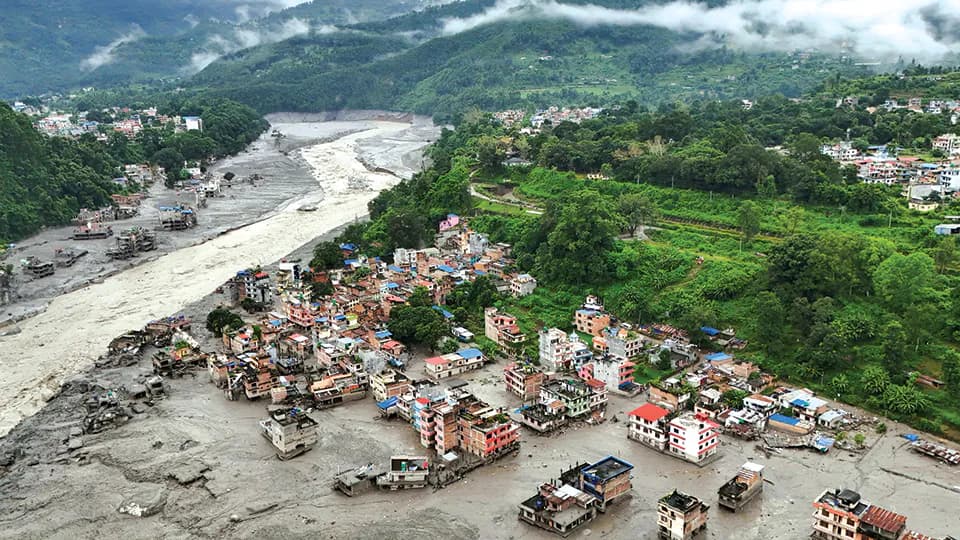
Nepal disaster puts tourism under severe strain
Dhaka : A catastrophic flash flood triggered by a glacial collapse along the Nepal-Tibet border has devastated communities, damaged critical infrastructure and left hundreds of people missing, throwing one of the Himalayas' important tourism and travel corridors into crisis. The disaster struck on August 26 after a massive collapse of ice and rock in the Himalayan region sent a surge of water, mud and debris down valleys in northern Nepal. The Rasuwa district was among the worst-hit areas, with homes, roads, bridges and other infrastructure swept away. The disaster also severely affected areas across the border in China's Tibet region. Nepal's reported death toll had reached at least 734 by August 30, while a large number of people remained unaccounted for. Rescue teams were continuing to search through devastated areas, although damaged roads, communications networks and difficult mountain terrain were complicating operations. Tourism corridor hit The disaster has particular significance for Nepal's tourism industry because the affected region is an important route for trekkers, pilgrims, tourists and cross-border trade.A local resident sits near a collapsed house lying deluged in sludge after the flash flooding at Devighat in Bidur municipality, Nepal's Nuwakot district, on August 27 Among those reported missing are foreign nationals, including tourists and pilgrims traveling in the Himalayan region. More than 3000 people have been reported missing near Nepal-China border, including hundreds of foreigners. The destruction of roads and bridges is expected to create immediate challenges for transportation and access to affected destinations. Search-and-rescue teams have relied heavily on helicopters in areas where roads have been destroyed or blocked. The damage also comes at a sensitive time for Nepal, where international tourism is closely tied to trekking, mountaineering, pilgrimage and adventure travel. Any prolonged disruption to transport links could affect tour operators, hotels, guides, transport providers and communities that depend heavily on visitors. Glacial hazards raise wider concerns The disaster has also renewed attention on the growing risks facing Himalayan communities and tourism infrastructure as glaciers and mountain environments become increasingly unstable. The event was initially associated with seismic activity, but experts and subsequent assessments identified a massive glacial and landslide collapse as the trigger for the destructive flood. Scientists have warned that rising temperatures are contributing to glacier loss and changing conditions in high-mountain regions, although individual disasters can have multiple contributing factors.Rescuers transport an elderly woman rescued from the flash flood in Trishuli Bazar, Nepal The speed and scale of the flood left little time for people downstream to respond. Entire sections of settlements were overwhelmed by water, mud and debris, while vehicles and buildings were carried away. Authorities on both sides of the border are now focused on locating survivors and missing people, restoring access and assessing the full extent of the damage. International governments and humanitarian organizations have also begun responding to the disaster. For Nepal's tourism sector, the immediate priority will be ensuring the safety of visitors and local communities while restoring transportation and communication links. Longer term, the disaster is likely to intensify discussions about early-warning systems, climate resilience and the safety of tourism infrastructure in the Himalayas. As rescue operations continue, the full human and economic cost of the disaster remains unclear. What is already evident, however, is that the flash flood has exposed the vulnerability of communities and tourism networks operating in one of the world's most dramatic-and increasingly fragile-mountain environments.