

Porto Alegre's recovery shows resilience of air demand: IATA

Dhaka: Porto Alegre-Salgado Filho International Airport's recovery from Brazil's worst disaster in 80 years is evidence that temporary disruptions do not permanently dent air travel demand, said the International Air Transport Association (IATA) in an industry case study report recently.
Porto Alegre serves as a key regional hub in southern Brazil, which normally handles six million passengers annually, around 5.8% of the country's total traffic.
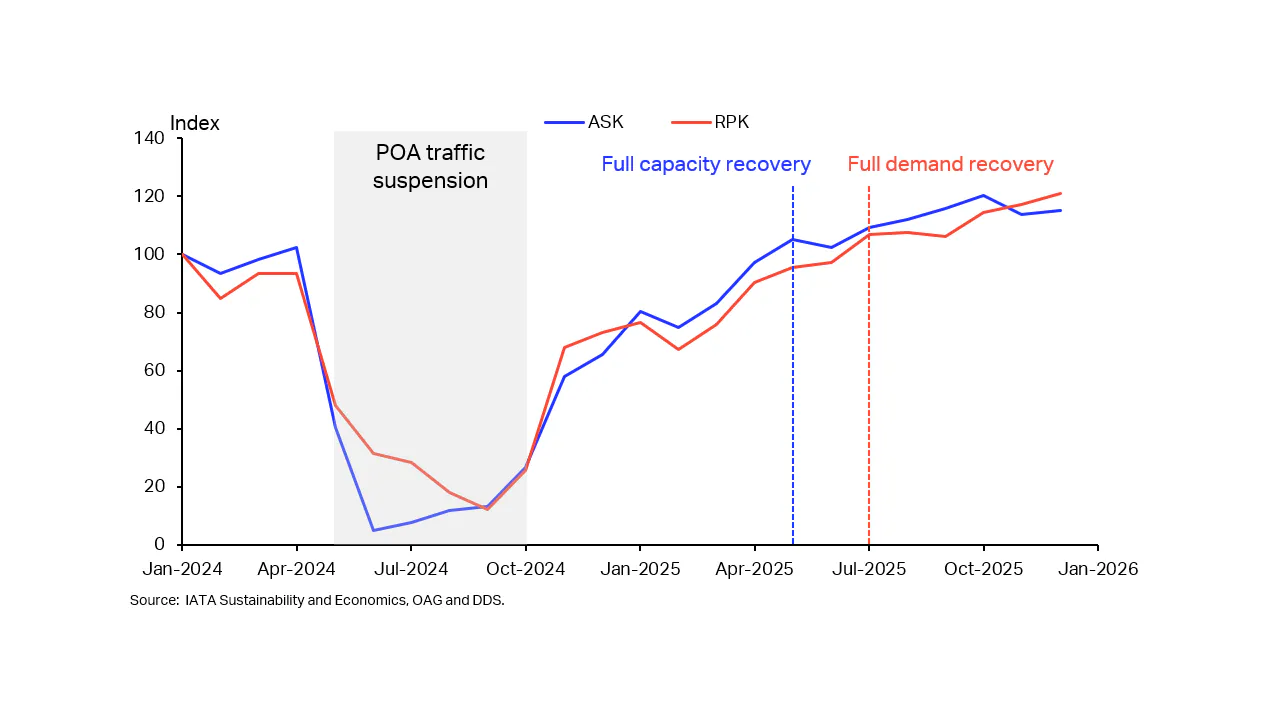
It connects other domestic destinations in the south and international routes to Argentina, Chile, and Uruguay. In May 2024, floods and landslides in Rio Grande do Sul forced a four-month suspension of flights at the airport.
As floodwaters covered the runway and damaged terminal infrastructure, operations were temporarily shifted to nearby Canoas Air Base with support from the Brazilian Air Force.
The airport operator began a gradual resumption from October 2024, restoring pre-flood capacity within eight months. Passenger demand bottomed out in September 2024 but exceeded January 2024 levels by July 2025, lagging the capacity recovery by two months.
IATA said the episode demonstrates that large external shocks tend to defer, rather than eliminate, demand for air travel if infrastructure is restored in a timely manner.
The trade association drew a parallel to current disruptions linked to the conflict in the Middle East, describing them as supply-side shocks that do not reflect any fundamental weakening in demand.
As connectivity is restored in affected regions, traffic should recover relatively quickly, IATA said, pointing to Porto Alegre as a model case.
IATA's case study underscores the aviation industry's broader resilience narrative, suggesting that infrastructure investment and swift restoration efforts remain critical to sustaining long-term passenger confidence during crises.