

Flash floods, landslides leave hundreds killed, missing in Nepal-China

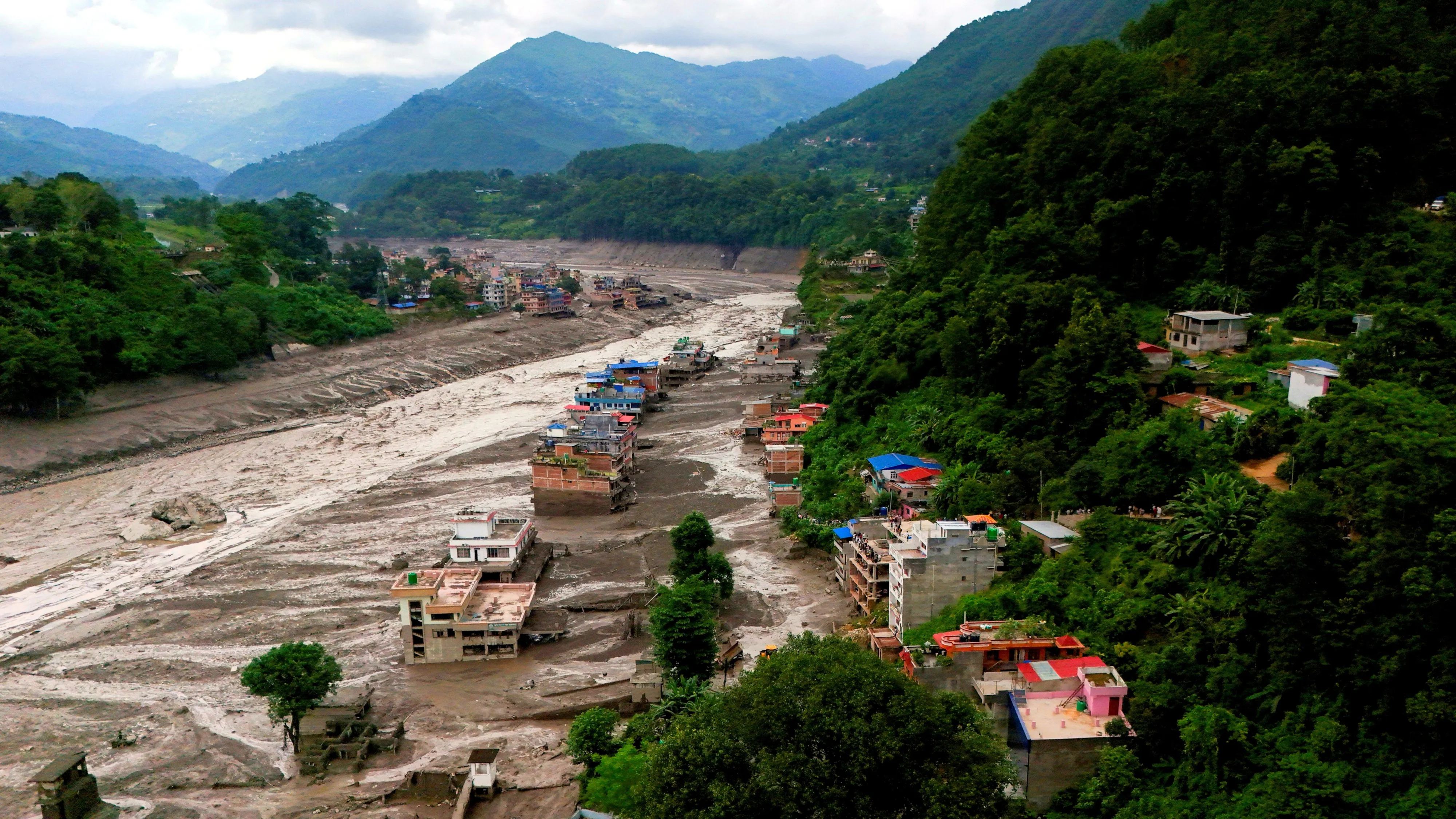
Dhaka: Flash floods and mudslides along the Nepal-China border have killed at least 160 people August 26, while more than 680 others remain missing in both countries, said media reports, citing officials.
Nepalese police said rescuers have recovered 157 bodies so far, and 54 people have been pulled to safety from the affected region. Meanwhile, Chinese state media reported three deaths and 265 people missing in the southern Tibet region.
Missing include soldiers, workers, tourists
The Nepalese Prime Minister's office said 44 army personnel, 28 police officers, 13 armed police, and 60 civilian employees working on hydropower projects are unaccounted for.
Officials initially said 484 tourists and travelers were missing, including 391 foreigners and 93 Nepali citizens.
Missing individuals include nationals of Nepal, India, the UK, South Africa, Malaysia, Australia, and the Netherlands, with many other nationalities still unconfirmed.
South Korea's Foreign Ministry said eight of its citizens are unaccounted for, while 10 others were stranded by the floods.
Infrastructure heavily damaged
Nepalese authorities said at least 19 bridges were swept away and roughly 40 kilometers of roadway were destroyed. Thirteen hydropower projects and around 200 trucks were also lost in the disaster.
Nepal's Foreign Minister Sishir Khanal told parliament the floods wiped out numerous hydropower facilities, government offices, and road infrastructure across the Rasuwa, Dhading, and Chitwan districts.
Rescue operations continue on both sides
Search and rescue teams have been deployed across the border region. Khanal said Nepal Police, Armed Police, and the Nepal Army have mobilized helicopters, drones, and rafting equipment for the operation.
In China, a mudslide struck near the Gyirong Port, a key border crossing in the Xizang Autonomous Region, also called Tibet. A state media reported that roads, communications, and power supplies to the port were cut off on the Chinese side.
Chinese President Xi Jinping ordered an "all-out" search and rescue effort, directing authorities to evacuate at-risk residents and treat the injured to limit casualties.
Hospitals and medical centers run by Nepal's government and security agencies in Kathmandu have been prepared to receive the injured.
Popular trekking route affected
The Rasuwagadhi area is a common access point for the Langtang region, one of Nepal's best-known trekking destinations, and is also used by travelers heading to Mount Kailash and Lake Mansarovar in China.
Nepal's National Disaster Risk Reduction and Management Authority said satellite imagery from Planet Labs suggests a snow-and-rock landslide near the border triggered a debris-laden flood in the Lhende River. Authorities are still assessing the full scale of the disaster.
The US Geological Survey attributed the seismic activity linked to the avalanche to a 5.2 magnitude landslide rather than an earthquake, revising an earlier assessment that had blamed a 4.4 magnitude earthquake for the avalanche.
Bangladesh expresses solidarity
Bangladesh's Ministry of Foreign Affairs, in a statement issued August 26, said the people of Bangladesh were shocked and saddened by the flash floods and mudslide in Nepal.
The statement, issued on behalf of Prime Minister Tarique Rahman's government, conveyed solidarity with the people and government of Nepal.
Dhaka offered deep condolences for those killed and expressed hope for the swift recovery and treatment of the injured and missing.
The Bangladesh government said it stands ready to assist Nepal with relief and rescue efforts in any way possible.
This is a developing story. Figures and other details may change as more information becomes available.