

Italy offers free training, quota-free entry for Bangladeshi workers


Dhaka: Italy plans to recruit nearly 500,000 foreign workers from Bangladesh and other countries over three years under its Decreto Flussi quota system, while trained workers can also enter outside the quota under a new provision.
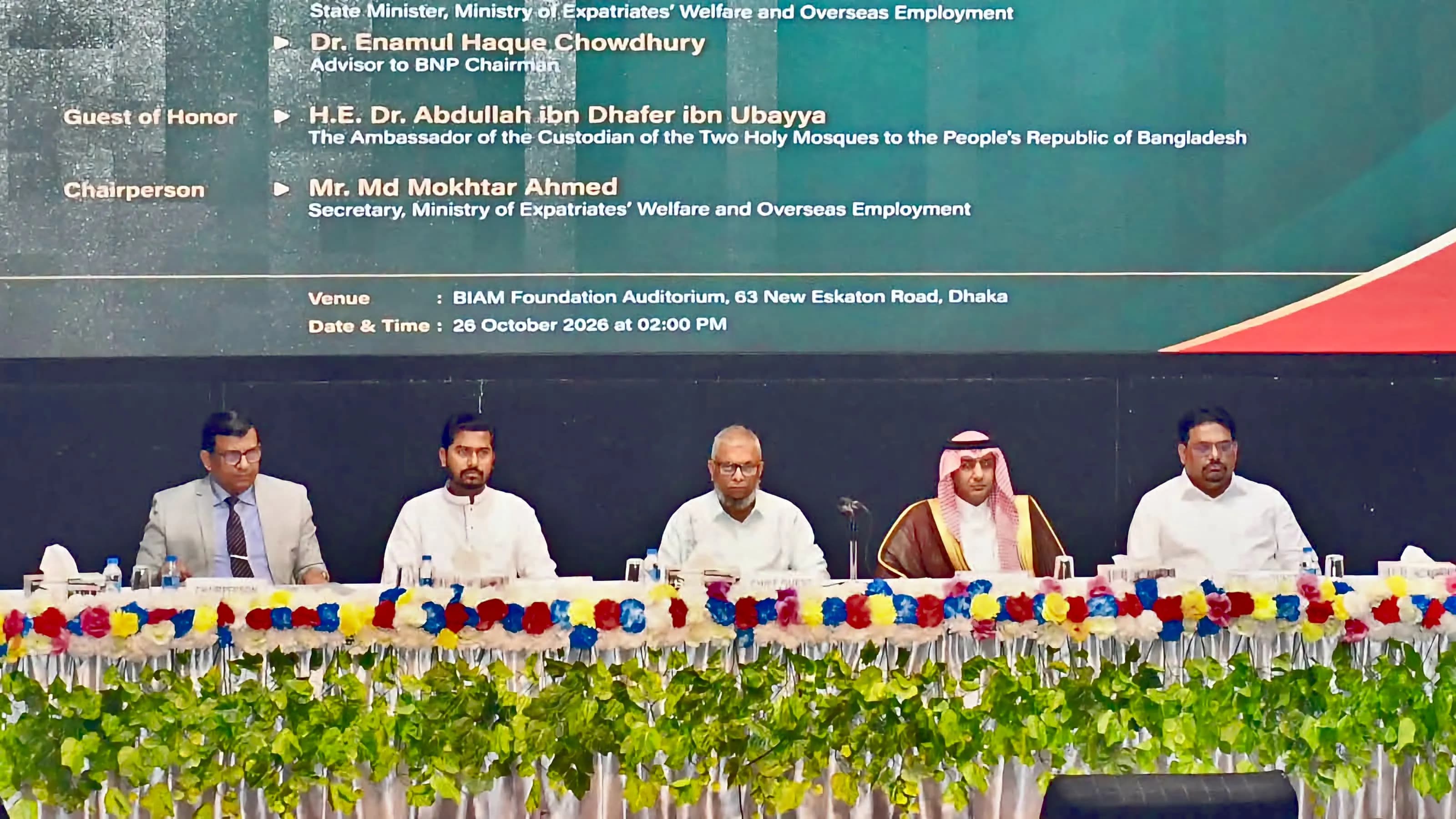
The Embassy of Italy in Dhaka highlighted legal migration, skills training, and Italian language proficiency at a seminar titled “Language, Civic and Professional Training for Skilled Migration to Italy” at a city hotel on November 3.
The embassy and its international cooperation partners jointly organized the event. It explained the provision, its regulations, and the outcomes of the first projects implemented in Bangladesh.
Italy will recruit 164,850 workers in 2026, 165,850 in 2027, and 166,850 in 2028, totaling 497,550. Organizers said Bangladesh has a reserved quota in recognition of its cooperation in repatriating irregular migrants.
Around 217,000 Bangladeshis currently live legally in Italy, including 80,000 work permit holders. They sent USD 1.7 billion in remittances to Bangladesh in 2025.
Italy introduced Article 23 in its immigration law to facilitate recruitment and integration of skilled workers. Those who complete a certified pre-departure training program approved by Italy’s Ministry of Labour and Social Policies can legally enter Italy outside the annual quota.
The training covers three areas: basic Italian language, civic education about Italy, and professional skills relevant to the workers’ sectors. It can be completed in Bangladesh, and applications can be submitted throughout the year without a designated click day.
Italian Ambassador Antonio Alessandro said employers would bear the full cost of the training, and workers would not have to pay any intermediary. Anyone found to have paid a middleman would be denied a visa.
He said recruitment under Article 23 would be based on the needs of Italy’s private sector. Companies would first identify the skilled workers they require, after which training would be designed, followed by selection of candidates.
Each project is assessed before an inter-ministerial committee led by Italy’s Ministry of Labour and Social Policies approves it.
The embassy clarified that a Nulla Osta is not permission to enter Italy but an authorization for an Italian employer to hire a worker. The embassy will make the final decision on the visa.
Mahdi Amin, Adviser to the Ministry of Expatriates’ Welfare and Overseas Employment and Spokesperson for the Prime Minister’s Office, attended as chief guest. He said the government would try to provide expatriate cards to workers before they leave for Italy.
The cards would help workers with remittances, family relationships, and access to government services. He added that the government would offer assistance through BOESL and other public institutions to those seeking skills-based migration.
Amin said many trainees had undergone five or six months of training and were developing proficiency in Italian as a third language alongside Bangla and English.
“We want to consider this a model,” he said, adding that the government would try to adapt the curriculum to technical training centers and vocational institutions.
Antonio Milo of Frontiere Skills said the initiative has five key advantages. It operates outside the quota system, offers free training, is monitored by the Italian government, prepares workers before arrival, and provides skills usable in Bangladesh even without migrating.
EU Deputy Head of Delegation Baiba Zarina spoke as a special guest on talent partnerships for safe, legal, and skills-based migration to Europe. Giuseppe De Giovanni, Migration Adviser at Italian Embassy, presented the keynote paper.