


Rice disease probe leads to new bacterium named after Bangladesh

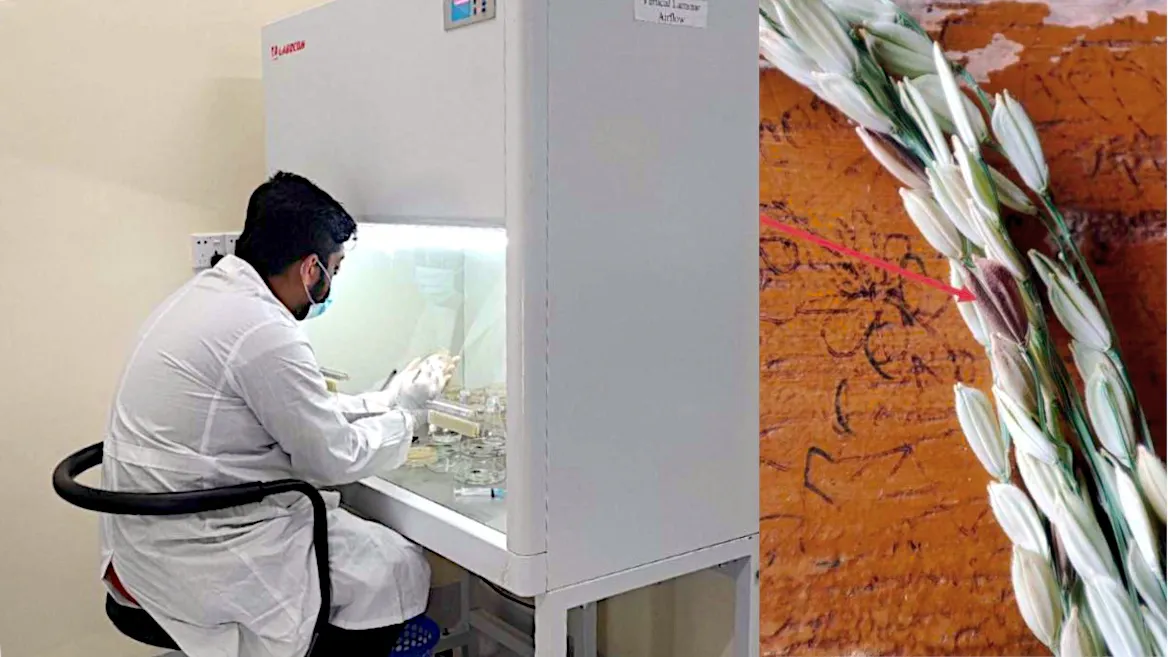
Dhaka: Researchers in Bangladesh have discovered a previously unknown bacterial species while investigating a rice disease and named it after the country. The findings have been published in Scientific Reports, a journal under Nature Portfolio.
The bacterium, named Pantoea bangladeshensis sp. nov. NSTU24, was found nearly four years ago by Arnab Goswami, then a final-year undergraduate student at the Department of Agriculture at Noakhali Science and Technology University (NSTU).
Disease in Rajshahi fields
The story began in February 2023, when rice grains in fields in Tanore upazila of Rajshahi started to discolor. In some cases, the grains also failed to mature properly. Professor Mehede Hassan Rubel of NSTU suggested that Goswami investigate the problem for his thesis.
Goswami collected diseased rice samples from Tanore. The researchers initially suspected a bacterium from the genus Burkholderia and isolated bacteria from the samples. They obtained seven suspected colonies and selected two isolates for further study.
Unexpected finding
Pathogenicity tests showed that both isolates could reproduce symptoms in rice plants similar to those seen in the infected field samples. This confirmed that the two bacteria were linked to the grain discoloration disease.
However, partial genetic sequencing produced a surprise. The bacteria did not belong to Burkholderia but to the genus Pantoea.
Ankan Dutta, a lecturer in the Department of Microbiology at Primeasia University, assisted at this stage. Pijush Kanti Jhan, an assistant professor in NSTU's Department of Agriculture, was also directly involved.
Genome analysis confirms new species
Goswami continued the project even after completing his undergraduate studies. Encouraged by Rubel, he started a complete genomic analysis of the bacterium. Maksudur Rahman Nayeem of DNA Solution Limited in Dhaka and A B Z Naimur Rahman of NSTU's Department of Microbiology later joined the team.
Whole-genome sequencing revealed that the bacterium did not match any known species. It represented an entirely new species within the genus Pantoea. Professor Tofazzal Islam, founding chairman of the Institute of Biotechnology and Genetic Engineering at Gazipur Agricultural University, provided guidance on the genomic analysis.
Hurdles to formal recognition
Discovering a new species does not automatically earn it an internationally recognized name. Under the International Code of Nomenclature of Prokaryotes, a proposed bacterial species must be deposited in at least two recognized culture collection centers.
A culture collection is a specialized repository that preserves microorganisms under controlled conditions for future research. The original specimen kept for formal identification of a new species is known as its type strain.
The team initially submitted its manuscript to several well-known journals, but it was not accepted. Reviewers said the bacterium needed to be deposited as a type strain in two international collections to support the claim of a new species.
Permits, deposit abroad
Securing government permissions in Bangladesh was another challenge. The researchers approached the Ministry of Environment, Forest and Climate Change and, after a lengthy process, obtained the required PIC, MAT, and IRCC permits. Dr. Fahmida Khanom, then an additional secretary, and Deputy Secretary Amirul Kaisar assisted them.
The bacterium was then sent to the International Collection of Microorganisms from Plants (ICMP) in New Zealand and the BCCM/LMG collection in Belgium. Both accepted it as a type strain, meeting a key requirement for formal recognition.
Finally, after years of research and laboratory investigations, and after overcoming numerous obstacles, the research paper was published in Scientific Reports. The species name bangladeshensis derives from Bangladesh.
However, this is not the first time a species has been named after Bangladesh. Previously some other organisms, including Streptomyces bangladeshensis, Actinomadura bangladeshensis, and Rhizobium bangladeshense, were also named after the country.
Research without funding
The researchers said funding was a major hurdle for the study. They applied twice to the University Grants Commission of Bangladesh, but neither proposal received funding. Then they began the laboratory work using their own resources and largely relied on their own contributions for every stage, from sample collection to genomic analysis.