

Shanghai between tradition and tomorrow

Dhaka
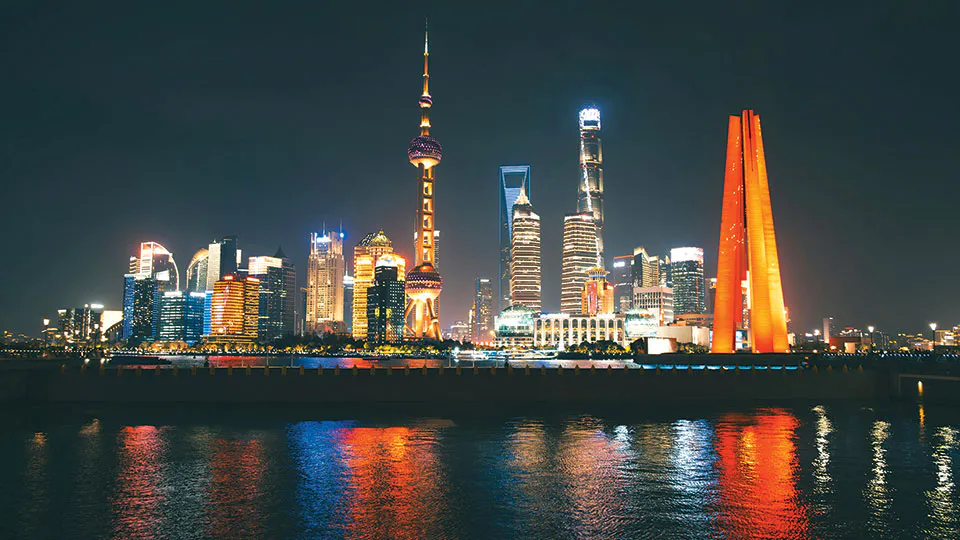
: From the stone embankment of the Huangpu River, Shanghai looks less like a
city and more like a declaration. Ferries cut through dark water beneath towers
of glass and steel, neon reflections ripple across the river, and crowds from
every corner of the world gather shoulder to shoulder along the promenade known
as The Bund. For a visitor arriving from Bangladesh after a journey through
Beijing, the first evening in Shanghai feels less like entering a destination
and more like stepping into the future.
My journey began in Dhaka with a direct flight to Beijing, one of the busiest gateways into China. Beijing itself is a city where dynastic history and modern state power coexist in striking contrast. I spent two days there, navigating broad avenues, monumental architecture, and the relentless pace of a capital that carries both political authority and cultural memory. But the next chapter of the journey began at Beijing's railway station, where China's famed high-speed rail network turns vast geography into a matter of hours.
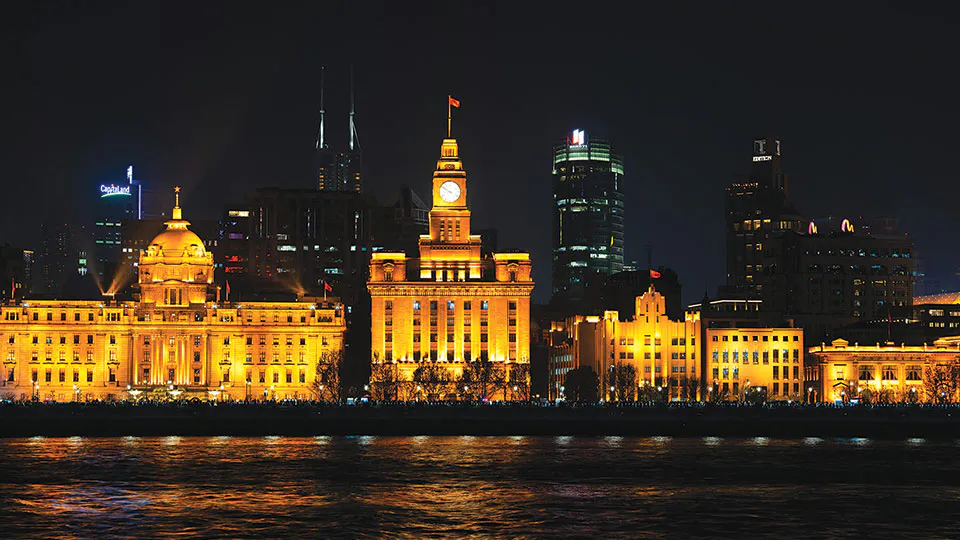 Viewed from the opposite bank of the Huangpu River,
Shanghai's historic Bund glows beneath the night sky as ferries and city lights
animate the waterfront
Viewed from the opposite bank of the Huangpu River,
Shanghai's historic Bund glows beneath the night sky as ferries and city lights
animate the waterfront
The
bullet train to Shanghai moved with astonishing precision. Outside the window,
industrial towns, green fields, elevated highways, and expanding suburbs
blurred into a seamless portrait of development. The train itself became
symbolic of modern China: efficient, ambitious, and relentlessly
forward-looking. For travelers from South Asia, where rail journeys are often
measured in patience and unpredictability, the experience was both impressive
and humbling.
By
the time I arrived in Shanghai, the afternoon sun had begun to soften. Yet the
city did not slow down. Traffic surged through elevated roads, metro stations
overflowed with commuters, and giant digital billboards flashed advertisements
above endless streams of pedestrians. Shanghai's rhythm is immediate and
demanding. It announces itself as China's financial capital with unapologetic
confidence.
That
evening, I made my way to the Bund.
Historically, the Bund was once the center of foreign concessions and international trade in colonial-era Shanghai. Today it remains one of the city's most recognizable landmarks, where European-style historic buildings stand facing the futuristic skyline of Pudong across the river. The contrast is dramatic: old stone facades on one side, shimmering skyscrapers on the other.
As
daylight faded, the promenade transformed. Families posed for photographs.
Young couples livestreamed against the skyline. Street musicians competed with
the sound of river cruises departing from nearby docks. Above all of it towered
the illuminated skyline of Pudong, dominated by structures that have become
global symbols of Chinese economic power.
The
city seemed determined to remain awake.
Standing
there late into the night, I watched how Shanghai presents itself to the world
- not cautiously, but confidently. Unlike cities that preserve silence after
dark, Shanghai amplifies itself. The lights become brighter, the crowds
thicker, the movement faster. Even near midnight, the Bund pulsed with energy.
For a travel journalist, the scene offered more than visual spectacle. It revealed the psychology of a city eager to project momentum. Shanghai's riverfront is not merely a tourist attraction; it is political theatre, economic advertisement, and cultural performance rolled into one. The skyline across the Huangpu River tells a story of transformation that China wants the world to see.
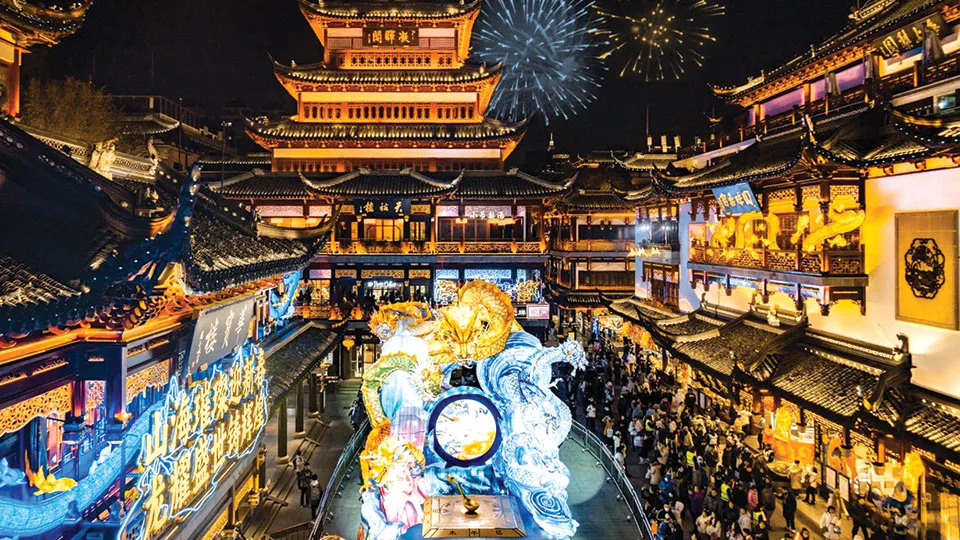 Lanterns light up the Yuyuan commercial district at night, where traditional Chinese-style architecture blends with the energy of modern tourism and commerce
The
next morning, however, revealed another side of Shanghai.
I
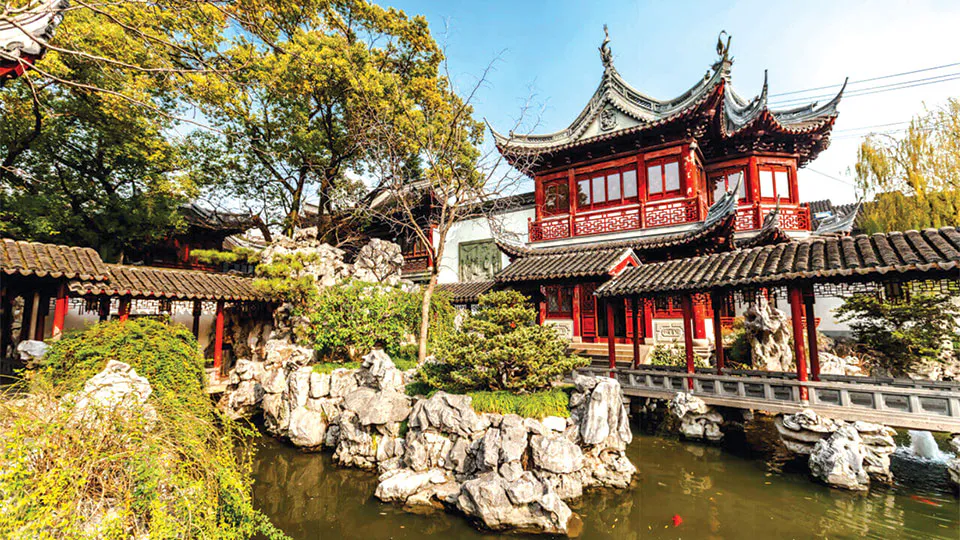
traveled to Yu Garden, one of the city's oldest and most beloved cultural
landmarks. Unlike the vertical ambition of the Bund, Yu Garden invites visitors
inward - into courtyards, ponds, zigzag bridges, carved pavilions, and
centuries-old aesthetics rooted in classical Chinese philosophy.
Built
during the Ming Dynasty, the garden feels intentionally detached from the
velocity of modern Shanghai. The noise of traffic fades behind whitewashed
walls and curved rooftops. Koi fish drift slowly beneath stone bridges. Bamboo
sways beside carefully arranged rocks designed to imitate natural mountains.
Every structure appears composed not for grandeur, but for balance.
Yet
outside the garden gates, commerce quickly returns.
The
surrounding bazaar area was crowded with tourists, souvenir shops, tea houses,
and food vendors selling steamed buns, grilled seafood, and traditional snacks.
The narrow lanes remained packed well into the evening. Visitors moved
continuously between old architecture and modern consumption, illustrating
another defining characteristic of contemporary China: heritage preserved
within aggressive commercial expansion.
I
stayed around Yu Garden until nightfall, observing how the area evolved after
sunset. Lanterns illuminated rooftops and bridges with warm golden light.
Reflections shimmered across the ponds. The atmosphere became almost cinematic,
attracting photographers and tourists who lingered long after dusk.
What
struck me most during those two days in Shanghai was the city's ability to
sustain contradiction without appearing conflicted. Shanghai is historical yet
futuristic, intensely commercial yet deeply aesthetic, crowded yet meticulously
organized. It is a city where ancient garden walls exist beneath the shadows of
skyscrapers, where traditional tea culture survives beside luxury fashion
outlets and algorithm-driven finance.
For
travelers arriving from Dhaka, Shanghai also raises unavoidable questions about
urban ambition in Asia. The infrastructure, transportation systems, and public
organization reveal what sustained long-term planning can achieve. At the same
time, the city's scale and speed can feel overwhelming, even disorienting.
Yet
perhaps that is Shanghai's defining quality: it refuses to be observed
passively.
The
city demands attention. It dazzles, exhausts, persuades, and performs all at
once. Whether standing beside the illuminated riverfront of the Bund or
wandering through the quiet pathways of Yu Garden, a visitor senses that
Shanghai is constantly negotiating between memory and modernity - and in that
negotiation lies the story of modern China itself.