


Bangladesh eyes expanded air traffic services over Bay of Bengal
Establishing FIR over additional airspace could unlock new revenue, but requires ICAO approval process and regional coordination

Dhaka
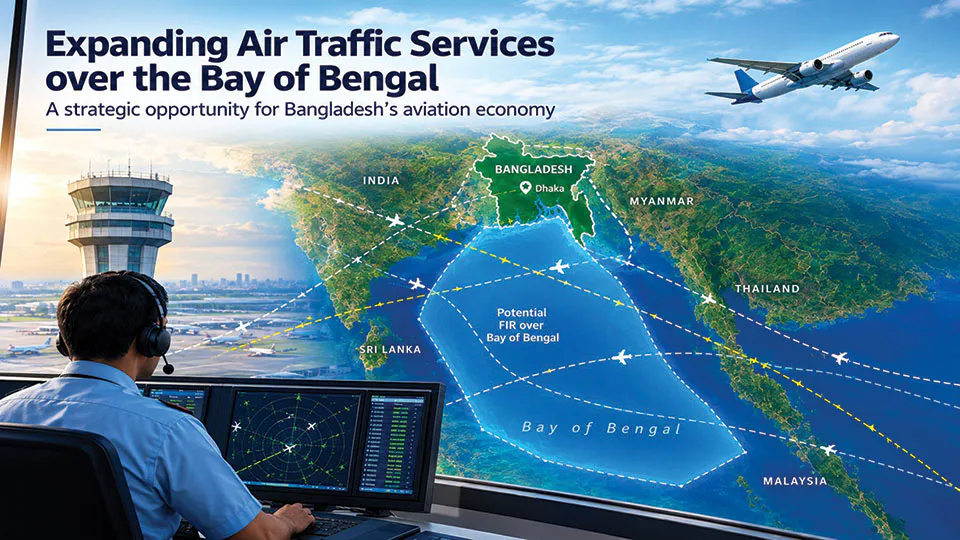
: Bangladesh could unlock a significant new source of aviation revenue by
exploring the expansion of its air traffic services over the Bay of Bengal and
pursuing the establishment of a Flight Information Region (FIR) over the
corresponding airspace, according to an analysis of the country's airspace
potential.
Bangladesh's
strategic location between South and Southeast Asia makes its airspace an
important corridor for international commercial aviation. More than 400
aircraft reportedly overfly the Dhaka FIR daily, generating revenue through air
navigation and overflight charges without necessarily landing at any
Bangladeshi airport.
The country's next opportunity could lie in the extensive airspace over the Bay of Bengal, where international air routes connect major aviation markets across the region. Bringing additional airspace under Bangladesh's air traffic services could generate further revenue, provided the country can demonstrate the operational capability to manage the traffic safely and efficiently.
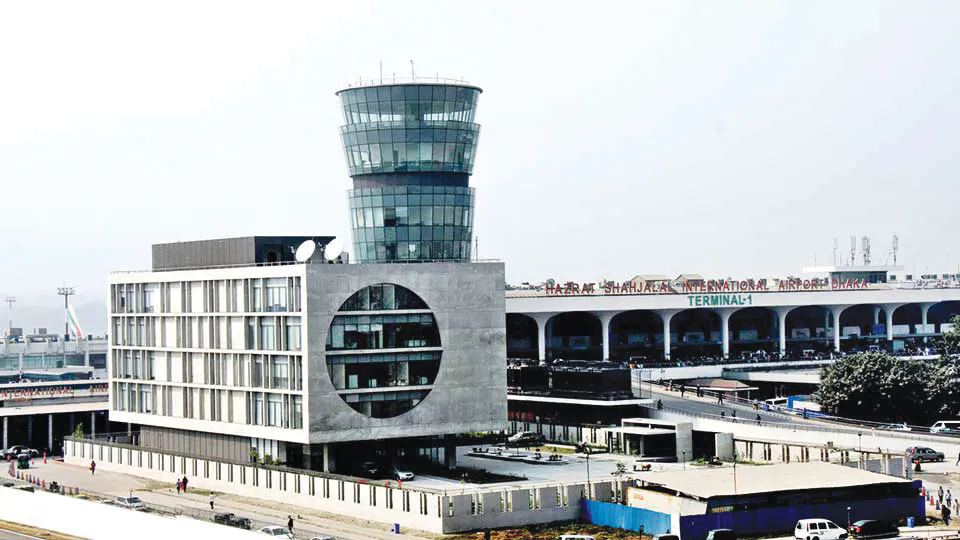 Air Traffic Control Tower at Hazrat Shahjalal International Airport in Dhaka
Bangladesh
secured its maritime Exclusive Economic Zone (EEZ) in 2012 and 2014 but has yet
to establish a FIR over the corresponding airspace. However, an EEZ does not
automatically confer the right to establish a FIR. Any proposed extension would
require detailed technical and operational assessments, consultations with
neighboring states and consideration under the International Civil Aviation
Organization's (ICAO) Asia-Pacific regional air-navigation planning process.
Safety,
operational efficiency and the ability to provide reliable air traffic services
would be central to determining any new airspace arrangements. The Bay of
Bengal's interconnected routes and the interests of multiple countries make
regional coordination particularly important.
Bangladesh has strengthened its air traffic management capabilities through the installation of modern radar and air traffic management, communications, navigation and surveillance (ATM/CNS) systems. These developments could support the handling of additional overflights, subject to the capacity of the overall air traffic management system and the requirements of any proposed expansion.
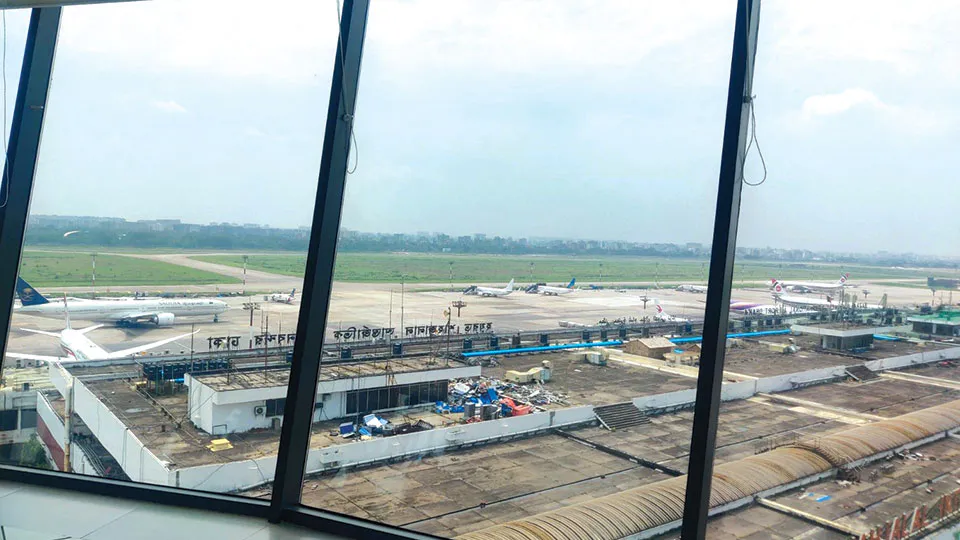 Airport view from the inside of air traffic control tower
The
potential financial returns could be substantial. Bangladesh earned
approximately BDT 199.29 crore from overflight revenue during January-March
2026, compared with BDT 184.53 crore in the same period of 2025 and BDT 157.15
crore in 2024.
An
illustrative scenario suggests that an additional 200-400 chargeable
overflights daily, at an average charge of around USD 400 per aircraft, could
generate USD 29.2-58.4 million annually. This is a hypothetical calculation
rather than a revenue forecast; actual returns would depend on the airspace
assigned, traffic volumes, applicable charging arrangements and the costs of
providing the services.
Expanding
air traffic services over the Bay of Bengal would therefore require more than
installing surveillance equipment or identifying potential routes. Bangladesh
would need to establish the technical, operational and institutional case for
any proposed FIR arrangement, engage neighboring countries and follow the
applicable ICAO procedures.
For
Bangladesh, the challenge is to translate its geographical advantage into an
economically viable aviation asset while maintaining the highest standards of
safety and regional cooperation. A structured assessment of the additional
airspace that could responsibly be managed, the investment required and the
potential economic return could provide a starting point for this initiative.