

Surprise Asian airport overtakes Heathrow as world's busiest

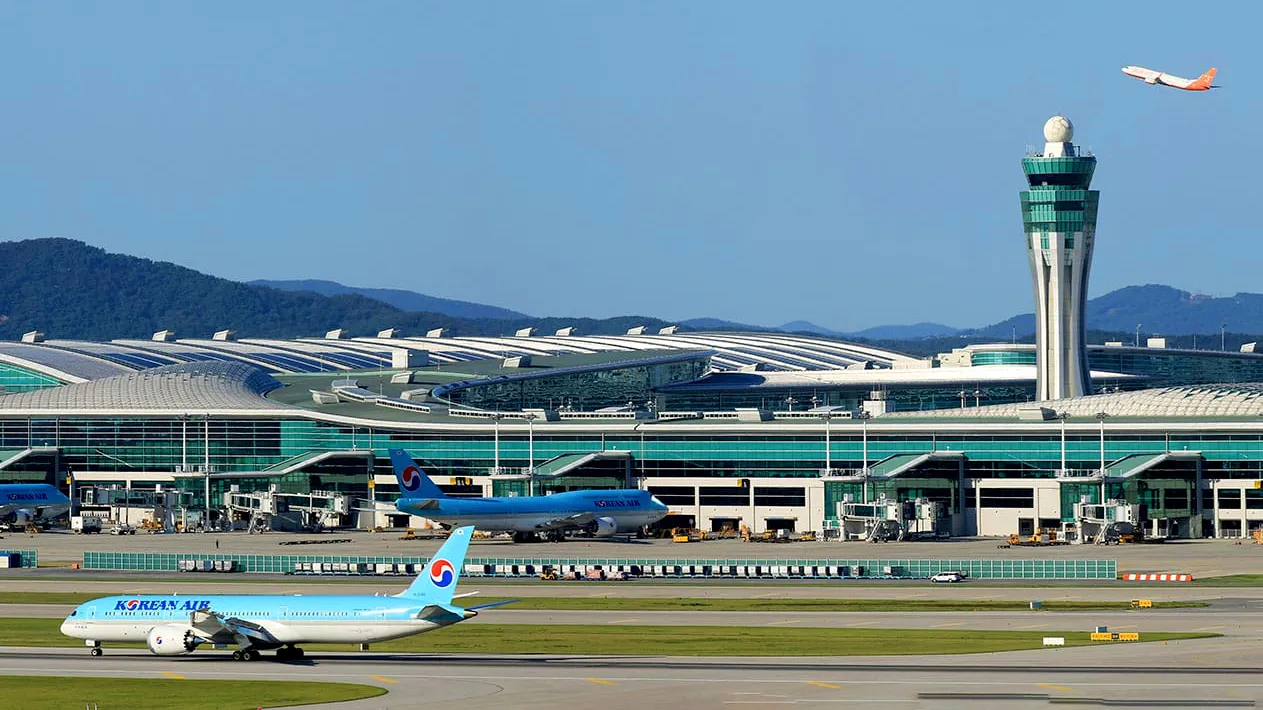
Dhaka: South Korea's Incheon International Airport has become the world's busiest airport for international passengers, aided partly by disruptions in the Middle East stemming from the Iran war.
Located about 48 kilometers west of the South Korean capital of Seoul, the airport handled 38.39 million international passengers in the first half of 2026, according to preliminary data compiled by the Airports Council International (ACI), the global trade body for airports.
London's Heathrow ranked second with 37.79 million passengers, followed by Singapore's Changi airport with 34.53 million, the data showed.
This marks the first time Incheon has led the international passenger rankings since the facility opened in 2001. The airport stood 10th globally in 2002, climbed to fifth by 2018, and held third place in both 2024 and 2025.
Incheon International Airport Corporation (IIAC) attributed part of the surge to the US-Iran conflict, which weakened Middle Eastern hubs such as Dubai and redirected transfer traffic toward alternative routes through East Asia.
Overall, Incheon's international passenger traffic rose 6.3% year-on-year, with a growing number of foreign visitors also contributing to the increase.
Foreign travelers made up 39.3% of Incheon's passengers in the first half of the year, up from 35.2% for all of 2025. That share hit a record 44.4% in the second quarter, driven largely by rising visitor numbers from China and Japan.
Meanwhile, Heathrow logged 40 million total passengers, domestic and international combined, in the first half of the year — its busiest such period on record. Its Asia-Pacific traffic grew 7.9%, while capacity to the Middle East fell 16.5% amid the regional conflict.
Separately, Istanbul overtook Heathrow this week as Europe's busiest airport by total passenger volume, with figures released on August 11 showing 8.15 million passengers passed through Istanbul in July, compared with Heathrow's 7.9 million.
Incheon has also strengthened its position as a global hub, currently serving 101 airlines connecting to 183 cities, including 158 international destinations.
Meanwhile, a four-phase expansion completed in late 2024 raised the airport's annual passenger capacity to 106 million.