

Migrants face growing uncertainty as Middle East war disrupts jobs, wages

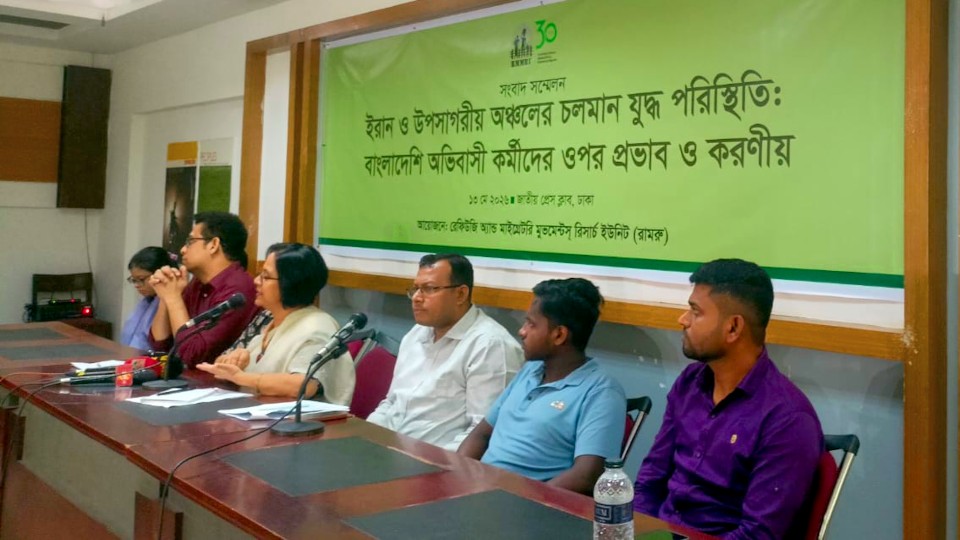
Dhaka: Bangladeshi migrant workers in the Gulf are facing mounting uncertainty over jobs, wages, and safety as the ongoing Middle East conflict disrupts regional economies and labor markets, researchers and migration experts warned at a press conference organized by the Refugee and Migratory Movements Research Unit (RMMRU) at the National Press Club on May 13.
RMMRU said the war has already begun affecting overseas recruitment from Bangladesh. Citing BMET data, the organization said outgoing migration dropped by nearly 50% in March compared with the same period last year.
“At least 5,000 Bangladeshis have lost jobs in Lebanon, while some Saudi companies have reduced their workforce,” said Mohammad Rashed Alam Bhuiyan, associate professor of political science at Dhaka University.
“Workers are not only facing wage cuts and wage theft but are also struggling with rising inflation across Gulf countries since the war began,” he added.
He also said at least 11 Bangladeshis had been killed in Gulf countries during the conflict.
According to RMMRU, around 200 Bangladeshis have already returned from Iran since the outbreak of the war.
“But we still do not have complete data on returnees from the government, which is crucial for their reintegration,” said Tasneem Siddiqui, founding chair of RMMRU.
She urged the Ministry of Expatriates’ Welfare and Overseas Employment to allocate funds from the national budget for war-affected migrants instead of relying on the Wage Earners’ Welfare Board fund, which is financed by migrant workers’ contributions.
RMMRU warned that prolonged instability could also jeopardize Saudi Arabia’s Vision 2030 mega projects, including NEOM, Red Sea tourism development, and Qiddiya entertainment city, potentially reducing future employment opportunities for Bangladeshi workers in construction and service sectors.
The organization also expressed concern over the possible expansion of the conflict to the UAE, where nearly two million Bangladeshis live and work.
Migration expert Mohammad Jalal Uddin Shikder criticized the lack of a coordinated government response, saying there is no real-time monitoring system for stranded migrants, cancelled flights, or returnee flows.
RMMRU recommended setting up special migrant crisis response cells at Bangladeshi missions in GCC countries, launching 24/7 Bangla hotlines, and creating emergency support systems for stranded and returning workers.
K