

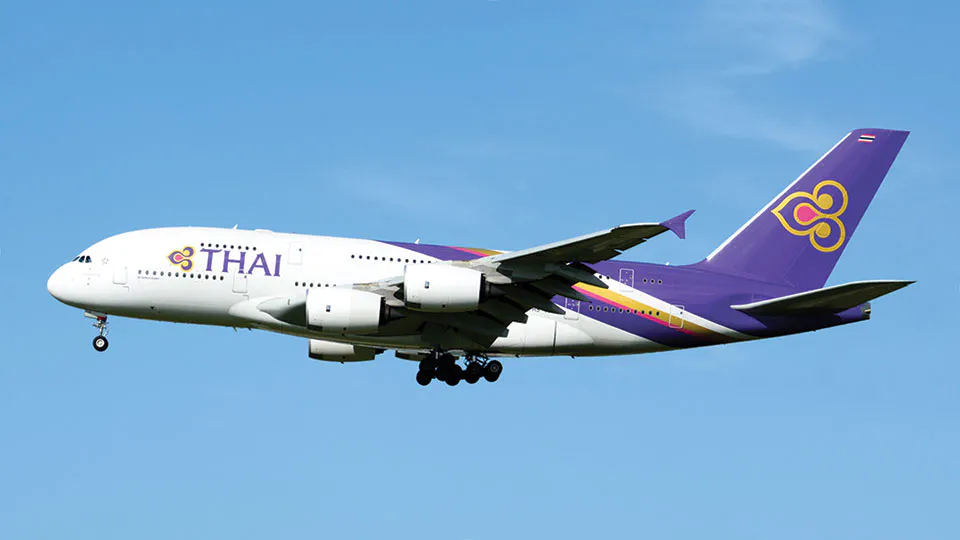
Thai Airways sees stronger Bangladesh demand, plans Auckland return

Dhaka
: Thai Airways International expects continued growth in the Bangladesh market
as rising outbound travel and demand for regional and long-haul destinations
strengthen the airline's position in South Asia, according to Shofi Ul Alam,
Assistant General Manager of Sales for Thai Airways in Bangladesh.
The
airline, which has served Bangladesh for more than six decades, is marking its
66th anniversary this year. Alam said Bangladesh remains a strategically
important market, both for direct travel to Thailand and as a source of
connecting passengers using Bangkok as a gateway to Asia, Europe and the South
West Pacific.
Bangkok
remains key gateway
Thai
Airways has seen encouraging demand over the past year across both
point-to-point and connecting markets. Leisure travel remains an important
driver, while business, medical, education and visiting-friends-and-relatives
traffic also contribute significantly.
Bangkok's
role as a regional hub is particularly important to the airline's Bangladesh
strategy. Through its Bangkok network, Thai Airways connects Bangladeshi
travelers with destinations including Japan, China, Southeast Asia and
Australia.
The
airline also sees opportunities in the South West Pacific, particularly New
Zealand. According to Alam, Thai Airways plans to resume flights to Auckland by
March 2027, potentially adding another important destination for Bangladeshi
travelers to its network.
New
A321neo enters Bangladesh service
Thai
Airways is also using newer aircraft and upgraded products to strengthen its
appeal in Bangladesh.
The
airline recently introduced its new Airbus A321neo on the Dhaka-Bangkok route.
The aircraft features a Royal Silk Business Class cabin with lie-flat seats,
alongside upgraded Economy Class facilities.
The
A321neo is part of the carrier's broader transformation program, which combines
its traditional Thai hospitality with newer aircraft, technology and onboard
products.
Alam mentioned the airline's 2026 anniversary theme, "Our Heartware. New World.," reflects its effort to preserve its service culture while modernizing the passenger experience.
 Shofi Ul Alam
Thai
Airways has also introduced changes to its international baggage policy, moving
to a Piece Concept system from March 2, 2026. Passengers can additionally
purchase excess baggage in advance.
Competition,
fares
The
Bangladesh-Thailand market has become increasingly competitive, with Gulf and
Asian carriers offering alternative routes to major international destinations.
Alam
claimed Thai Airways' advantage lies in its direct Bangkok connectivity,
extensive onward network, Thai hospitality and competitive fares. The airline
has also received international recognition, ranking 10th among the world's
best international airlines in Travel + Leisure's 2026 World's Best Awards.
Ticket
prices, however, remain a major consideration for Bangladeshi travelers. Alam
added fares are affected by factors including demand, seasonality, fuel prices,
airport charges, taxes, currency movements and seat availability across fare
classes.
The
airline plans to continue monitoring market conditions while emphasizing
overall value, including baggage allowances, onboard services and network
connectivity.
Bangladesh
seen as
Thailand
remains a popular destination for Bangladeshi travelers, with beaches,
shopping, cuisine, wellness, culture and family-oriented tourism among the
attractions driving demand.
Alam
expressed greater cooperation among airlines, tourism authorities, travel
agencies and tour operators could further expand the market through joint
promotions, packages and destination marketing.
He
also identified Bangladesh's large population, expanding middle class and
growing interest in international travel as factors supporting long-term
potential.
Infrastructure
remains priority
While
optimistic about the market, Thai Airways said continued improvements to
Bangladesh's aviation infrastructure will be important to support future
growth.
Alam
pointed to the need for greater airport capacity, more efficient aircraft
turnaround, improved passenger processing and expanded digital aviation
services. He also called for constructive cooperation among airlines, airports
and regulators and a predictable regulatory environment.
Looking
ahead, Thai Airways plans to build on its Bangkok hub and evaluate additional
capacity, frequencies and network opportunities as demand develops.
After
more than 60 years in Bangladesh, the airline's objective is to remain a
preferred carrier for Bangladeshi travelers while positioning Bangkok as a
gateway connecting the country with a wider range of global destinations.