

China’s big three airlines heading for full-year losses as fuel costs surge

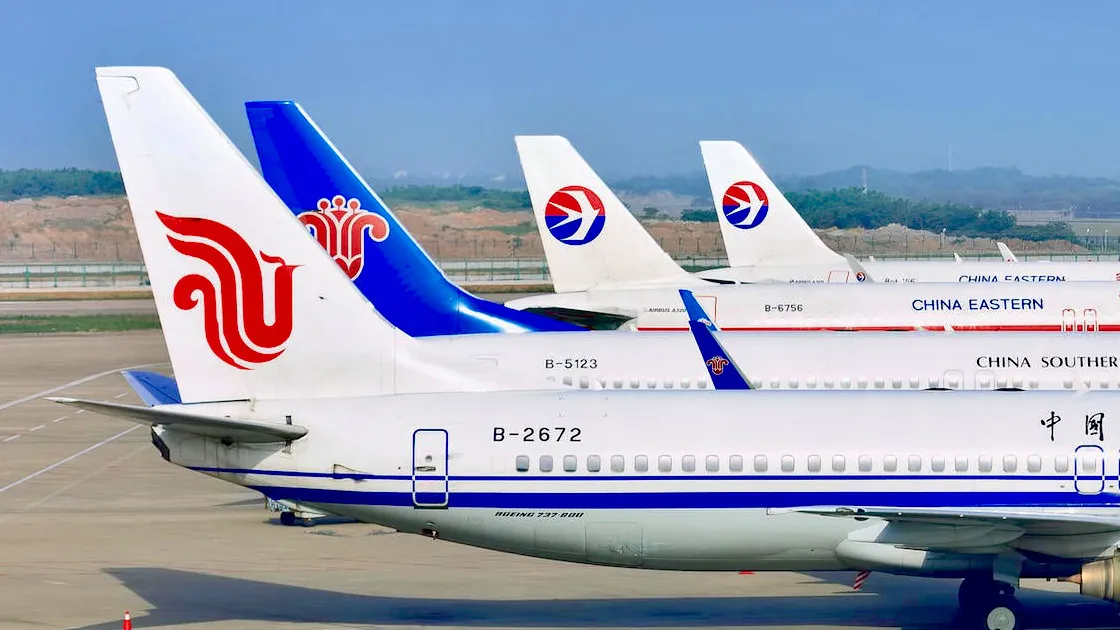
Dhaka: China’s three largest airlines are on course to end the year in the red, as surging jet fuel costs, soft domestic fares, and typhoon disruptions sharply weakened their third-quarter results from a year earlier.
Analyst estimates compiled by LSEG show Air China and China Eastern Airlines heading for a seventh straight annual net loss since the COVID-19 pandemic.
China Southern Airlines returned to profit in 2025 for the first time since 2019 but is also expected to slip back into losses.
Air China's third-quarter net profit plunged 92.6% year on year to CNY 270.6 million, equivalent to USD 40.62 million, while China Eastern's profit for the quarter fell 98.2% to CNY 64 million.
China Southern swung to a net loss of CNY 609 million in the quarter, compared with a net profit of CNY 3.84 billion a year earlier.
All three carriers also reported losses for the first nine months, although they were profitable in the same period of 2025.
The third quarter covers the peak summer travel season and is traditionally the strongest for Chinese carriers. This set a high base for year-on-year comparisons. All three airlines attributed the steep rise in jet fuel prices to the weaker results.
Jet fuel prices have more than doubled since the US and Israel launched a military campaign against Iran in late February. Chinese airlines hedge much less of their fuel than many Asian and European rivals, leaving them more exposed to oil price swings.
Intense competition, including from high-speed rail, also kept domestic fares low in the quarter. Huatai Securities estimated that Air China's yields, a proxy for airfares, fell 5%, leaving the airline unable to offset higher fuel costs.
Nathan Gee, Head of Asia-Pacific transport research at BofA Global Research, said, "Chinese airlines are expected to remain in net loss into the seasonally weaker fourth quarter," noting that the third-quarter results were slightly better than "very low expectations."
He added that domestic fares were rising at double-digit rates year-on-year after the October Golden Week holiday, as airlines kept a tight lid on capacity. However, fuel remains the biggest headwind.
Airlines are trying to increase flying hours per aircraft to control costs, but substantial cost cuts will be difficult, Gee said.
Shares of Air China, China Eastern, and China Southern have fallen 38%, 46%, and 39%, respectively, so far this year.