

Etihad to fly A380 on all four daily London Heathrow flights

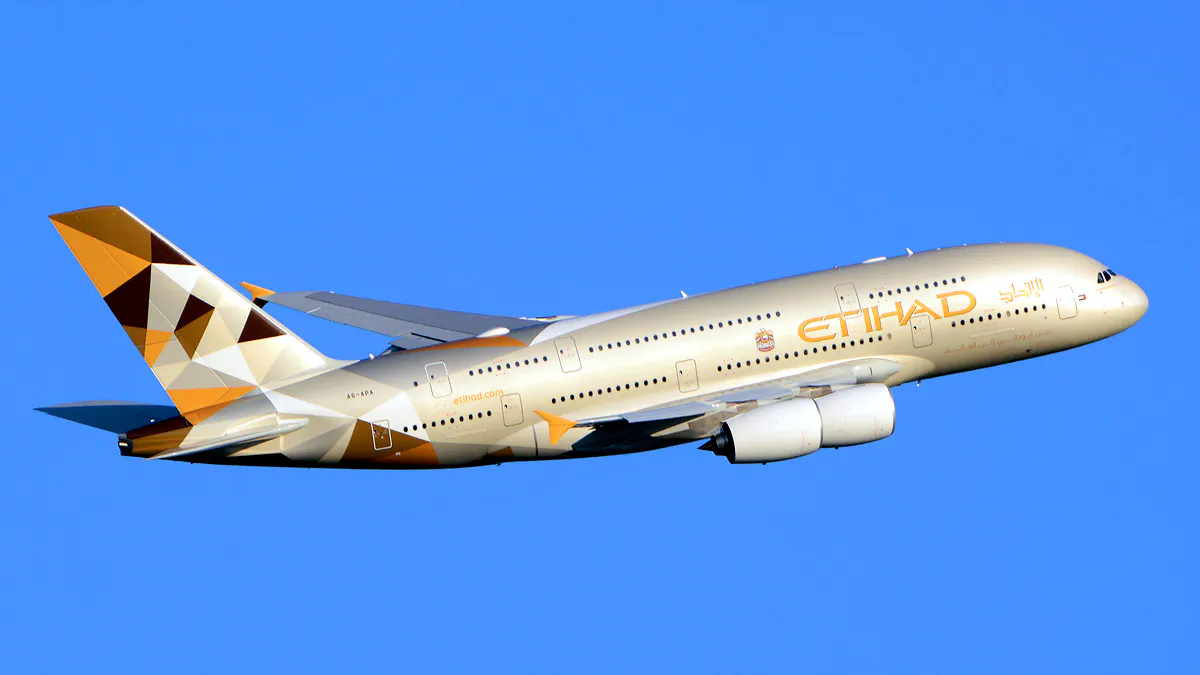
Dhaka: Etihad Airways will operate all four of its daily flights between Abu Dhabi and London Heathrow with the Airbus A380, moving up the timeline by three months, according to a schedule change flagged by an airline schedule-tracking platform.
The all-A380 operation on the route will begin December 15, instead of the previously planned date of March 27, 2027, which marked the end of the Northern Winter 2026/27 season.
With demand on the UK route holding steady and slot constraints at Heathrow limiting new frequencies, Etihad is using the superjumbo to add capacity, a strategy also employed by Emirates on the same route.
The rollout will happen in stages. From October 25, the EY63/64 service will shift from five weekly Boeing 787-9 flights and two weekly A380 flights to a daily A380 operation.
The EY65/66 service will next transition from the 787-9 to the Airbus A350-1000, before also switching to the A380 by mid-December, freeing up the twin-engine widebody jets for deployment elsewhere in the network.
Under the revised schedule, A380 departures from Abu Dhabi will be staggered at 2:45 am, 8:10 am, 10:40 am, and 2:10 pm, while departures from Heathrow will be set for 8:50 am, 1:55 pm, 7:20 pm, and 8:55 pm.
The change will spread the aircraft's capacity across the day and mark a significant rise in available seats on the route.
Heathrow's growing role in the airline's A380 network highlights the airport's importance to the Abu Dhabi-based carrier in the post-pandemic period.
Demand rebounded sharply after COVID-19 restrictions were lifted, prompting many airlines to reconsider earlier decisions to retire the A380 in favor of more fuel-efficient twin-engine jets.
Etihad had grounded all 10 of its A380s and had not planned to bring the type back into service. However, delayed deliveries of new aircraft, caused by pandemic-related supply chain disruptions, made the A380 financially viable again.
The airline initially reintroduced only a limited number of A380s for Heathrow operations but later expanded their use to help offset ongoing widebody delivery delays across its network.
While the A380 is not considered a long-term solution, continued manufacturing and supply chain constraints have restricted Etihad's ability to secure alternative widebody capacity.
Given these limitations, the airline plans to keep using the aircraft, with London Heathrow serving as the clearest example of its role in Etihad's fleet strategy through the mid-to-late 2020s.