

Nepal launches campaign to reassure global travelers after devastating flood disaster

Dhaka: Nepal's tourism authorities have intensified efforts to restore international visitor confidence following the catastrophic glacier-induced floods that struck the Nepal–Tibet border region on August 26, causing widespread destruction, loss of life, and severe disruption to several popular trekking and pilgrimage routes.
The disaster, triggered by the collapse of a Himalayan glacier, unleashed massive floods, mudslides, and debris flows that devastated parts of Rasuwa, Nuwakot, and surrounding districts.
Hundreds of people lost their lives, while thousands remain missing, including a significant number of foreign tourists and pilgrims from more than 30 countries. Critical infrastructure, including roads, bridges, hydropower facilities, and border crossings, suffered extensive damage.
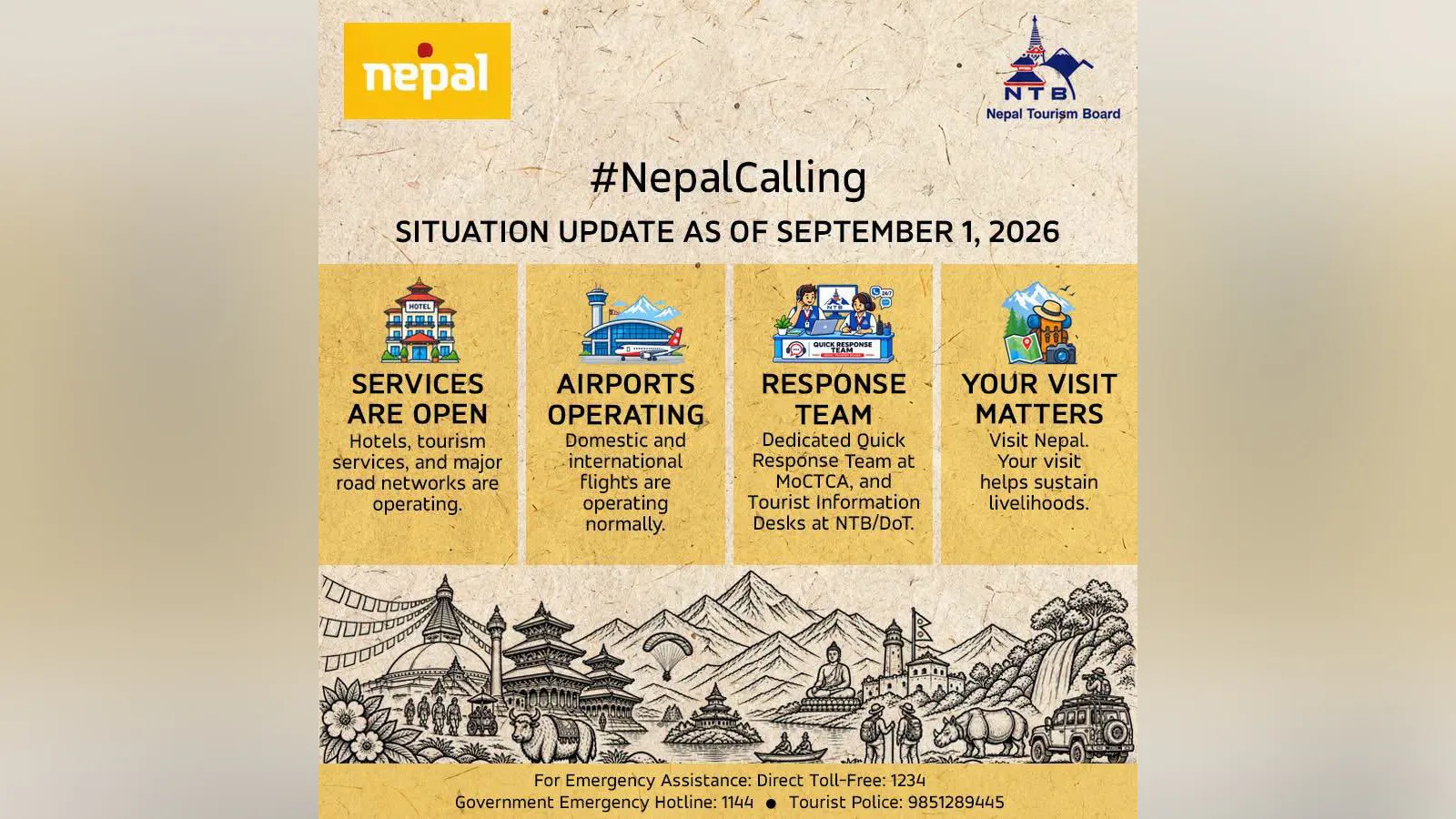
In response, the Government of Nepal, the Ministry of Culture, Tourism and Civil Aviation, and the Nepal Tourism Board have launched a coordinated campaign to reassure international travellers that the vast majority of the country’s tourism destinations remain safe and accessible.
Tourism officials have emphasized that major destinations such as Kathmandu Valley, Pokhara, Chitwan National Park, Lumbini, and most trekking regions were not directly affected by the disaster and continue to welcome visitors.
Authorities are working closely with international partners, foreign embassies, airlines, tour operators, and travel associations to provide updated travel advisories, restore damaged infrastructure, and ensure the safety of tourists currently in the country. Rescue and recovery operations continue in the affected northern districts, supported by local security forces and international assistance teams.
The Nepal Tourism Board has also been actively communicating with overseas travel trade partners and media outlets to counter concerns that the disaster has impacted the entire country.
Officials stress that tourism remains vital to Nepal’s economy, supporting hundreds of thousands of jobs and generating substantial foreign exchange earnings. Before the disaster, Nepal welcomed more than 1.15 million international visitors annually, with tourism showing strong post-pandemic recovery momentum.
Industry stakeholders fear that cancellations and negative perceptions could significantly affect the upcoming autumn trekking season, traditionally one of Nepal’s busiest tourism periods. Hoteliers, airlines, trekking companies, and local tourism entrepreneurs are therefore joining government-led initiatives to reassure travellers and promote unaffected destinations.
Tourism experts note that Nepal successfully rebuilt its tourism industry after the devastating 2015 earthquake and believe the country can once again demonstrate resilience through effective recovery, reconstruction, and transparent communication with the global travel community.
While recovery in the affected regions is expected to take considerable time, Nepal's tourism authorities remain optimistic that international visitor confidence can be restored through sustained safety measures, infrastructure rehabilitation, and proactive destination marketing campaigns.