

Music festivals at historic landmarks raise questions over heritage protection

Dhaka: Historic castles,
archaeological parks and ancient monuments are increasingly becoming venues for
electronic music festivals, creating spectacular experiences for audiences
while raising concerns about the long-term preservation of cultural heritage.
From London’s Old Royal
Naval College to Egypt’s Great Pyramids of Giza, organizers are bringing
contemporary music into historically significant settings. The trend has gained
momentum in recent years, with architecture, history and distinctive landscapes
becoming major attractions alongside internationally known performers.
The Old Royal Naval
College in southeast London, a UNESCO World Heritage Site with a history
spanning more than three centuries, recently hosted Labyrinth on the Thames,
featuring DJ Peggy Gou. Similar events have taken place at Germany’s Zollverein
industrial complex, Croatia’s Pula Arena, Hungary’s Buda Castle and Italy’s
Parco Archeologico di Segesta.
For organizers, these
venues offer more than an unusual backdrop. They provide an opportunity to
introduce historical sites to younger audiences and connect cultural heritage
with contemporary entertainment.
However, staging
festivals at protected locations requires careful planning and close
cooperation with heritage authorities.
At Sicily’s Segesta Archaeological Park, organizers Fabrizio Costa and Matthew Hoag worked with local officials to comply with preservation requirements. Obtaining approval can be difficult, with final permissions sometimes arriving only shortly before an event.
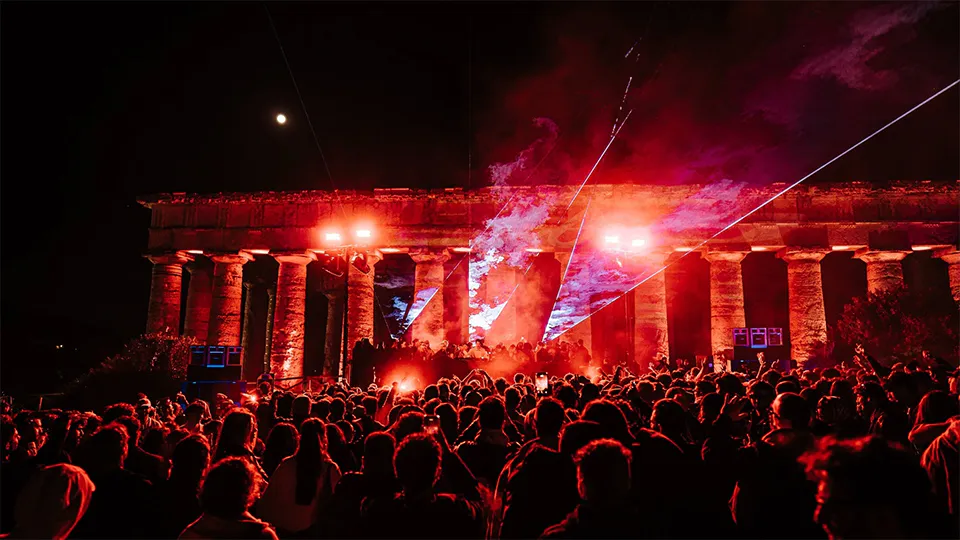 Aura Festival takes over the Doric Temple of Segesta
UNESCO guidance does not
prohibit festivals at World Heritage Sites but calls for measures to limit
potential damage. These include monitoring sound and vibrations, directing bass
away from monuments, controlling lighting intensity and keeping heavy equipment
away from foundations. Heritage and environmental impact assessments may also
be required.
Organizers argue that
responsible events can give historic places renewed relevance. Ancient
amphitheaters and temples were once used for public gatherings and
performances, they note, making music a potential way to reconnect visitors
with their original cultural purpose.
Yet not every event has
received an entirely positive response.
Medaina Festival brought
house and techno music to Jordan’s ancient sandstone city of Petra and the Wadi
Rum Valley last spring. Reactions were mixed, with some observers questioning
the event’s cultural sensitivity and its relationship with local communities.
The debate has also
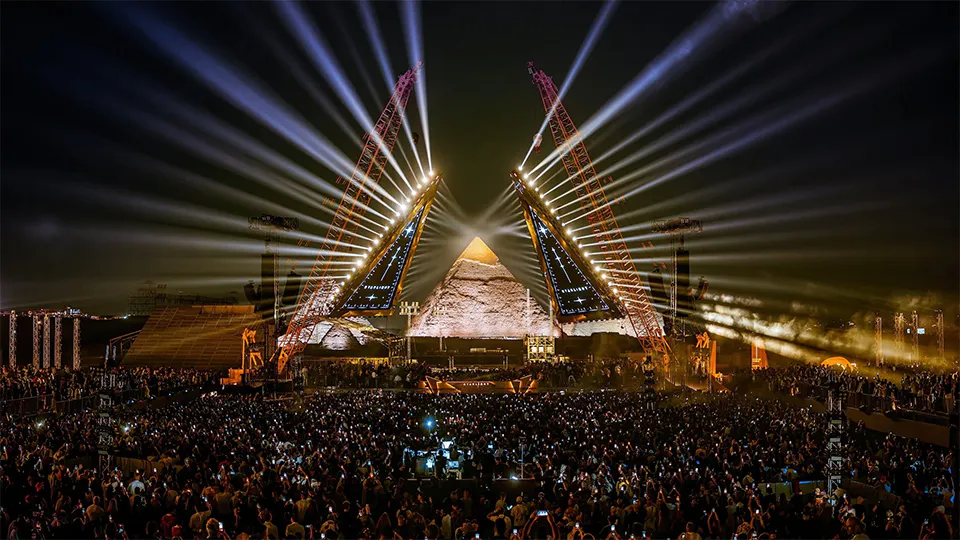
intensified around the Pyramids of Giza, where Egypt hosted the inaugural
Starlight Festival on October 9 and 10. Organized by EXIT Festival, the event
featured more than 60 artists and attracted around 15,000 people. The festival
site was approximately one kilometer from the pyramids rather than directly
beside the structures.
The event followed decades of musical performances near the ancient monuments, including appearances by the Grateful Dead, Frank Sinatra, Mariah Carey and the Red Hot Chili Peppers.
 Peggy Gou at the Old Royal Naval College, London
However, the Egyptian
Centre for Economic and Social Rights filed a lawsuit in late 2025 seeking
stronger restrictions on events near the pyramids. The complaint raised
concerns that loud sound and laser lighting could threaten the limestone
structures and surrounding archaeological environment.
Monica Hanna, a
researcher and one of the plaintiffs, said the aim was not to prevent young
people from attending concerts but to protect the monuments for future
generations. The plaintiffs have proposed holding such events at least five
kilometers away.
Celia Martinez of the
International Council on Monuments and Sites has similarly stressed that organizers
must recognize the fragility and cultural significance of heritage locations
rather than treating them like ordinary entertainment venues.
Starlight organizers say
respect for the site is central to their approach. Their program included
guided pyramid tours, educational activities and performances by local artists.
They also said the event would not use lasers or projections.
The debate ultimately
centers on whether tourism and entertainment can support heritage awareness
without putting irreplaceable landmarks at risk. Festivals may attract new
audiences and generate economic opportunities, but their long-term success will
depend on effective regulation, scientific assessment and meaningful engagement
with local communities.
As historic venues become increasingly attractive to festival organizers, balancing memorable experiences with conservation will remain essential to ensuring that these landmarks endure beyond the music.