

Nepal’s first female helicopter captain leads high-risk rescue missions

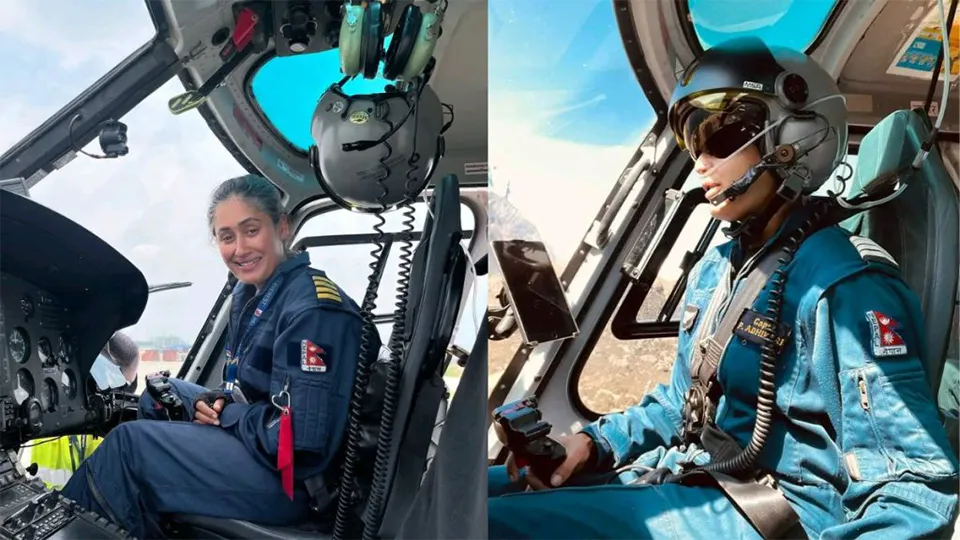
Dhaka: Nepal’s first
female helicopter captain, Priya Adhikari, has flown around 100 rescue missions
in less than a week as helicopters race to evacuate survivors from areas
devastated by flash floods and landslides.
The 41-year-old
high-altitude rescue pilot has been operating over some of the worst-affected
parts of the Himalayan region, including Timure in Rasuwa district, where
floodwaters and landslides have caused widespread destruction.
As per reports, Adhikari
described the operation as one of the most demanding of her career. She said
the disaster was in some ways more challenging than Nepal’s 2015 earthquake
because much of the destruction was concentrated within a narrow valley.
Adhikari has years of
experience flying rescue missions in difficult Himalayan terrain. Her work has
included evacuating injured climbers from elevations of about 6,200 meters.
Her path to aviation
began in a different field. After studying environmental science and working as
cabin crew, she became interested in helicopter flying following a joyride. She
later traveled to the Philippines for flight training and became a professional
helicopter pilot in 2017.
The current rescue
operation has presented pilots with a combination of difficult weather,
unstable terrain and intense air traffic. About 20 helicopters have been
operating around Timure, with several aircraft sometimes attempting to land in
the same confined area.
Adhikari said pilots must
remain in constant radio contact to coordinate landings and prevent collisions.
Mud left by floods and landslides poses another major hazard, as apparently
solid ground may be too unstable to support a helicopter.
In some locations, pilots
cannot even switch off their engines after landing because of the unstable
surface. Survivors must therefore be loaded quickly before the aircraft takes
off again.
More than 200 people were
evacuated from Timure during the first two days of the operation. Alongside
civilian aircraft, Nepal Army helicopters have also been involved.
Adhikari said the human
impact of the disaster has been difficult to process. During flights, she has
seen bodies scattered across devastated areas while survivors waited for rescue
aircraft.
Despite the exhaustion,
she said the pilots remain focused on their training and mission. “We’ve been
trained for this,” she said, as per reports, reflecting the determination
driving the rescue effort.