

Three South Korean low-cost carriers set to merge into one airline

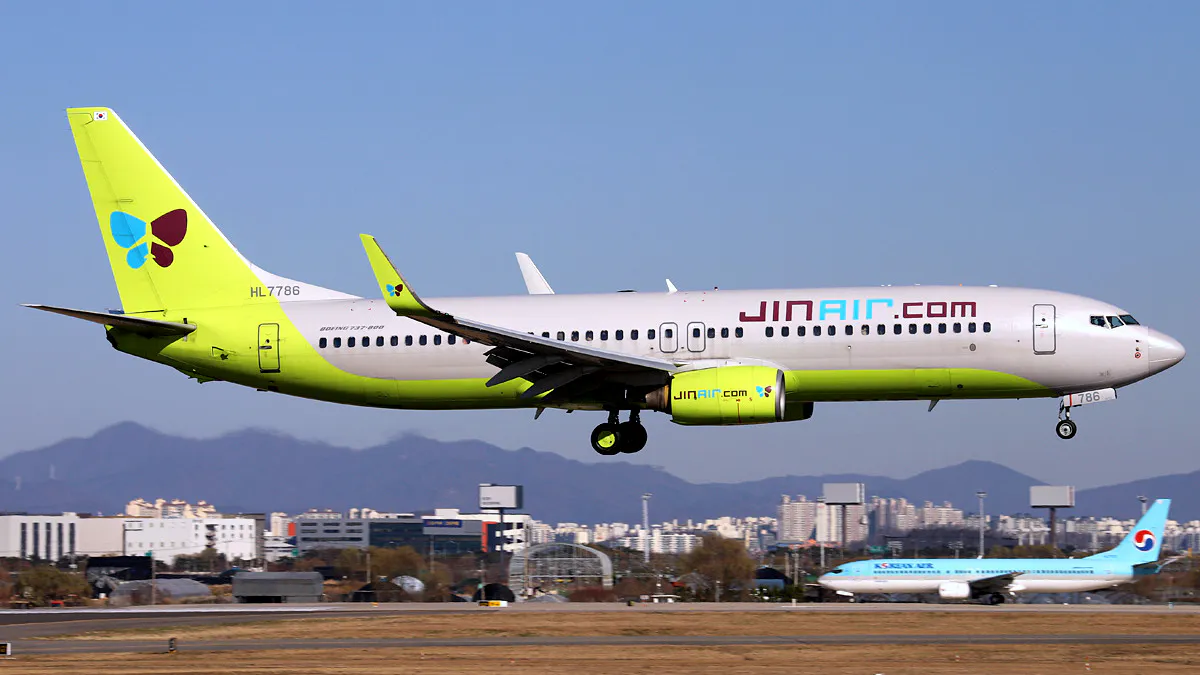
Dhaka: Three South Korean low-cost carriers under logistics giant Hanjin Group — Jin Air, Air Busan, and Air Seoul — are set to merge into a single airline under the Jin Air name starting March 17, 2027.
The boards of all three carriers approved the merger agreement on August 21, with shareholder votes expected in December, followed by regulatory clearance before the combined airline begins operations.
Once completed, the new Jin Air will become South Korea's largest low-cost carrier by fleet size, operating 58 aircraft under one brand. The airline plans to offer more flights, easier connections, and a unified loyalty program.
The three-way merger mirrors the ongoing consolidation between Korean Air and Asiana Airlines, expected to close on December 17, 2026. Jin Air operates under Korean Air, while Air Busan and Air Seoul both fall under Asiana.
Jin Air currently flies 47 international and 14 domestic routes, with key links between Seoul and Jeju, Tokyo, Osaka, and Bangkok. Air Busan serves 39 routes from its Busan hub, while Air Seoul operates 10 routes out of Incheon.
Under the agreement, Jin Air will absorb the assets, liabilities, employees, and legal status of both Air Busan and Air Seoul.
Securing a single Air Operator Certificate remains the biggest hurdle before the March 2027 launch. Jin Air said it intends to fold the operations of Air Busan and Air Seoul into its existing certificate in phases, pending a safety inspection by the Ministry of Land, Infrastructure and Transport.
Behind the scenes, the three carriers have already begun aligning operations, including updating manuals and conducting joint training for pilots and cabin crew.
Passenger-facing benefits such as combined bookings, shared flights, and a single loyalty program are unlikely to materialize until the merger is fully complete closer to 2027.
South Korea's budget aviation market remains competitive, with Jeju Air currently the largest independent low-cost carrier, operating 45 aircraft.
T'way Air has been expanding long-haul services to Europe and Sydney, while Eastar Jet and newcomer Parata Air compete heavily on the Seoul-Jeju route, widely cited as the world's busiest air corridor by passenger volume.