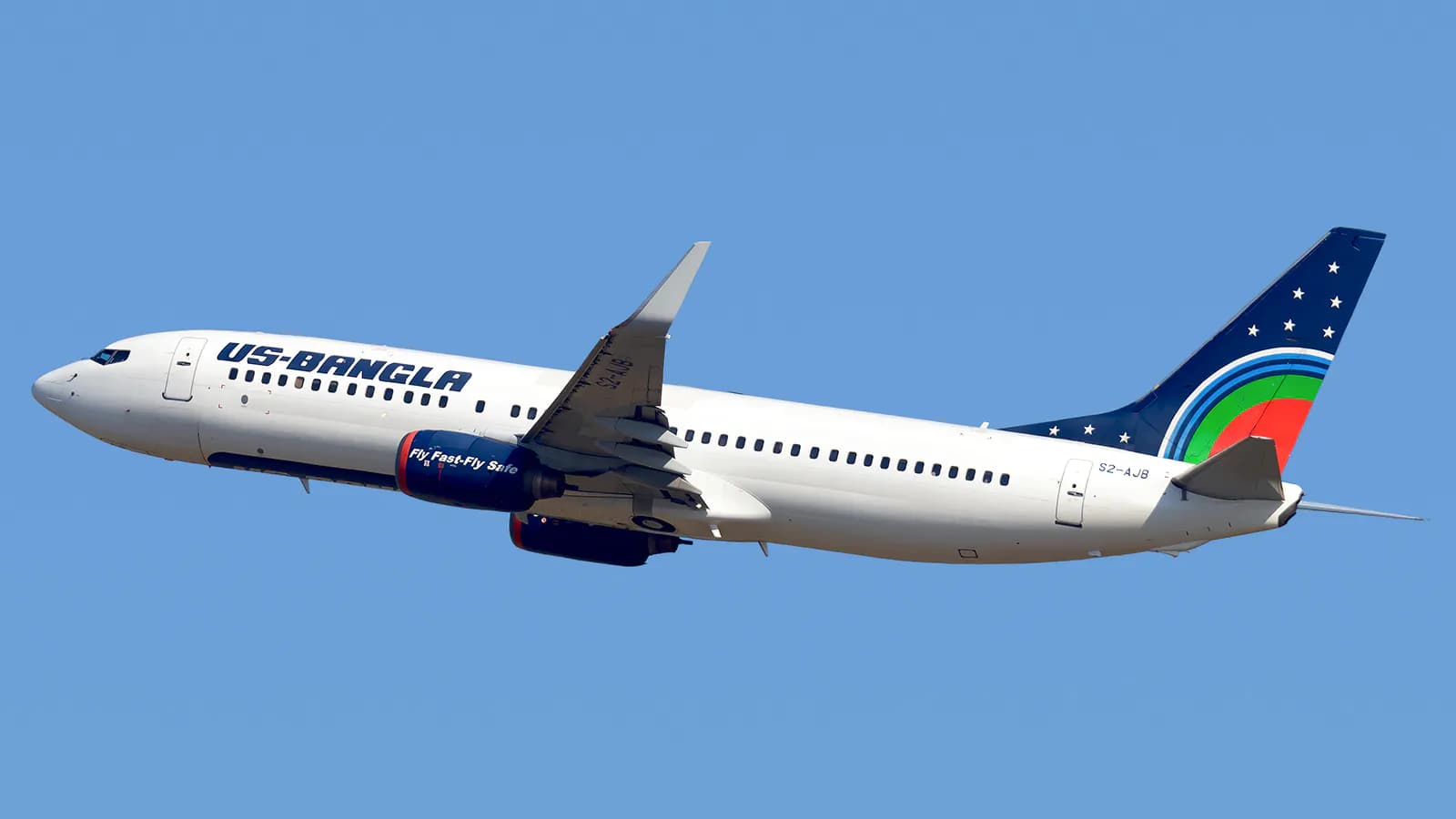


US-Bangla stands strong with ambitious fleet, network expansion goals


Dhaka
: US-Bangla Airlines, the country's largest private carrier, has completed 12
years of operations, overcoming numerous challenges through strategic planning,
consistency, and lessons learned from the failures of several defunct airlines.
Talking
to The Bangladesh Monitor, Kamrul Islam, General Manager of Public Relations at
US-Bangla Airlines, said the airline's steady growth has been driven by careful
planning, passenger trust, and an unwavering commitment to safety.
From
two aircraft to fleet of 25
US-Bangla
launched operations on July 17, 2014, with two Dash 8-Q400 aircraft on the
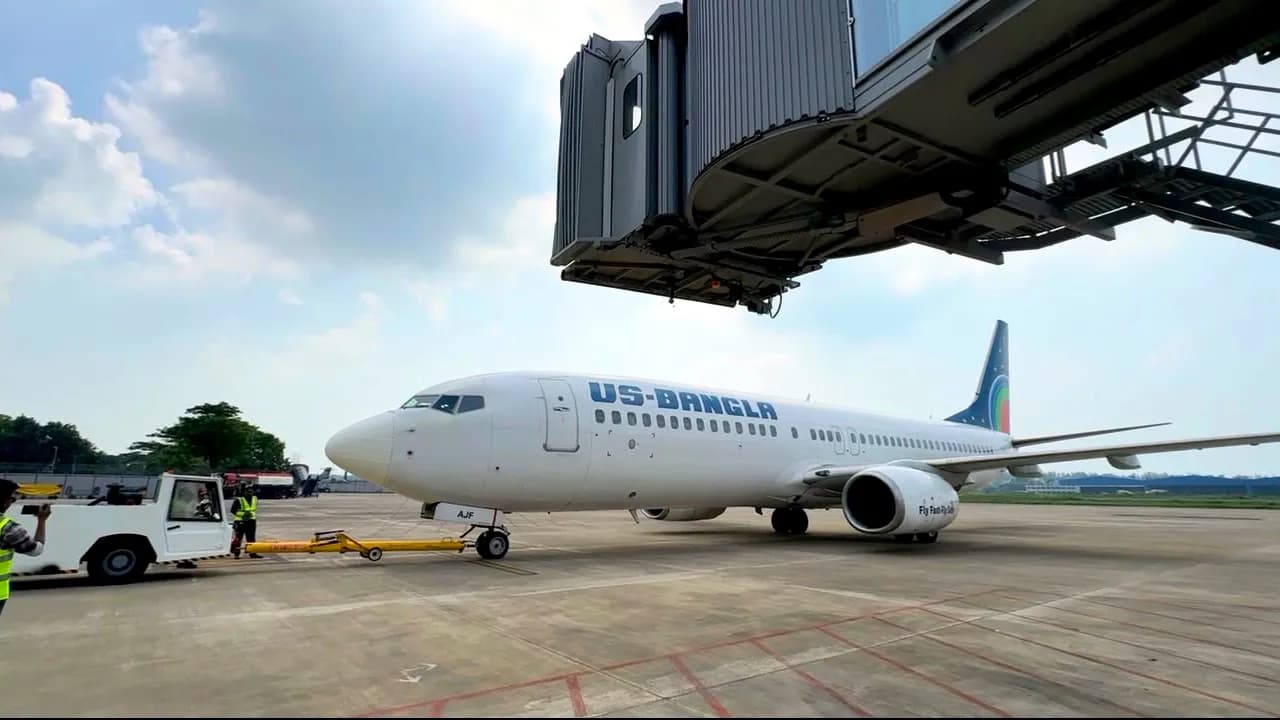
Dhaka-Jashore route. Today, it operates a fleet of 25 aircraft, including three
Airbus A330-300s and nine Boeing 737-800s, serving 14 international
destinations in 10 countries alongside five domestic routes.
Kamrul
said the airline aims to maintain this momentum to establish itself not only as
Bangladesh's leading carrier but also as one of Asia's finest.
Growth
backed by
According
to Kamrul, passenger trust has been the foundation of the airline's expansion.
While some view its growth as rapid, he said the company has always followed a
measured approach.
US-Bangla
initially focused on destinations with large Bangladeshi expatriate
communities, operating flights to cities including Jeddah, Riyadh, Dubai,
Sharjah, Abu Dhabi, Muscat, Doha, Kuala Lumpur, and Singapore. It also serves
leisure, business, and medical travel markets through destinations such as
Bangkok, Malé, Guangzhou, and Chennai.
Expansion
plans through 2027
Beginning
in 2027, US-Bangla plans to add 21 Boeing aircraft to its fleet, enabling it to
launch services to 10 to 12 new international destinations while expanding
frequencies on existing routes.
The
next phase of growth includes destinations such as Kuwait, Bahrain, Brunei,
Dammam, Medina, Penang, and Johor Bahru. The airline also plans to establish
Chattogram and Sylhet as regional aviation hubs by basing four aircraft in
Chattogram and two in Sylhet for direct international operations.
Addressing
industry's skills gap
Kamrul
said Bangladesh's shortage of skilled pilots and aircraft engineers remains one
of the industry's biggest challenges.
To
help address the gap, US-Bangla has already trained 28 pilots in Florida, who
have since joined the airline, along with 18 aircraft engineers. The company
now plans to train another 200 pilots and 100 engineers over the coming years.
Aviation's
broader economic role
Kamrul
believes aviation and tourism have the potential to play a much larger role in
Bangladesh's economy. While the two sectors currently contribute around 3
percent to GDP, he said the goal should be to increase that figure to between 6
and 7 percent through stronger collaboration among aviation, tourism, and
hospitality stakeholders.
Reflecting
on his own career, Kamrul-who has worked in aviation public relations for
nearly three decades-described PR as a profession that demands continuous
dedication, particularly in the era of social media and global operations
across multiple time zones.
He
added that organizations should invest in public relations consistently rather
than only during times of crisis, emphasizing that effective communication
requires industry knowledge, patience, and long-term commitment.