

Menzies eyes USD 12m investment, 1,000 jobs if selected as third terminal passenger handler

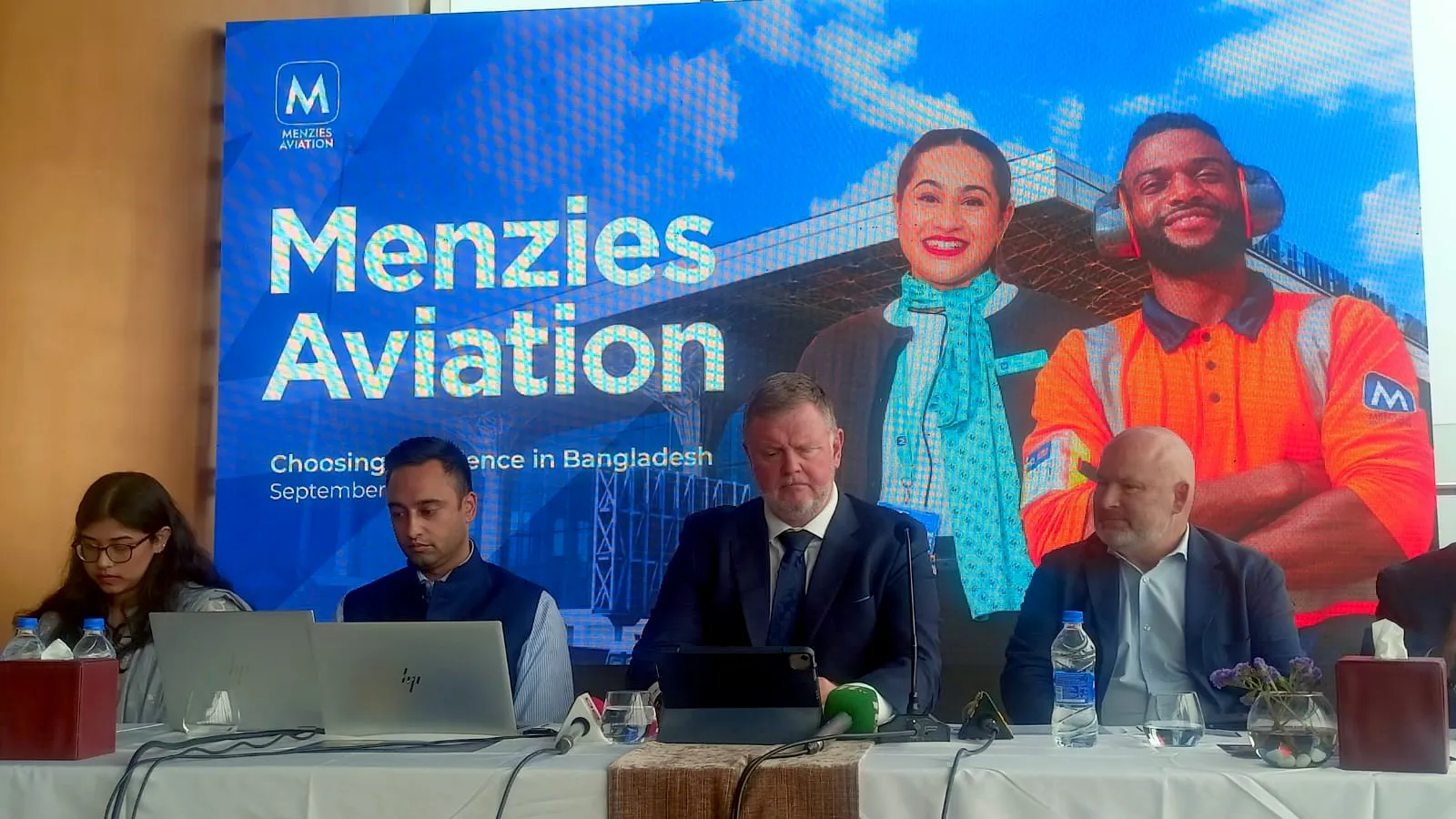
Dhaka: UK-based aviation services company Menzies Aviation is planning to invest around USD 12 million in Bangladesh in its first year of operations and create more than 1,000 direct jobs if it is selected as the second passenger-handling operator at Hazrat Shahjalal International Airport's Third Terminal.
The company also estimates that its operations could generate more than 4,500 additional indirect jobs through the wider economy and supply chain.
The company disclosed its proposed investment and employment plans at a press conference at a Dhaka hotel on September 17.
Menzies is competing with other international aviation services providers, including Celebi, dnata, Swissport, and SAT, for the passenger-handling contract at the new terminal.
John Henderson, Senior Vice-President of Operations for the Middle East and Africa; Charles Wyley, Executive Vice-President for the Middle East, Africa, and Asia; and Sakib Ershad, Director of Trade and Investment at the British High Commission in Dhaka, addressed the briefing.
Menzies said the proposed investment would go beyond airport operations, with a significant focus on developing Bangladesh's aviation workforce and strengthening local capabilities.
The company plans to establish a Menzies Training Academy in Dhaka to provide international-standard aviation training and develop long-term career opportunities for Bangladeshi nationals.
It also intends to work with local universities, colleges, and schools to introduce aviation-related programs, internships, and graduate pathways.
According to Menzies, these initiatives would facilitate international knowledge and skills transfer while developing local operational, technical, and management capabilities.
The company said Bangladeshi employees could also get opportunities to build international aviation careers through the skills and experience gained from its operations.
Menzies further plans to manufacture and source uniforms locally, which it said could create additional opportunities for Bangladesh's textile and garment industries and expand local participation in its supply chain.
The company said its overall approach would support the development of a sustainable aviation workforce through local recruitment, skills development, leadership progression, and long-term knowledge transfer.