

Bangladesh tourism needs national brand, visa reform, coordinated strategy

Dhaka
: Bangladesh has the natural, cultural, and human resources to become a major
tourism destination in South Asia, but weak branding, limited promotion, visa
barriers, and fragmented policymaking continue to hold the sector back,
according to a tourism development blueprint presented by Sadia Haque,
Executive Committee Member of the Travel and Tourism Development Centre (TTDC),
at its launch in Dhaka on August 8.
Titled
"Destination Bangla-desh: A Blueprint for Tourism That Welcomes the
World," the blueprint argues that the country's challenge is not a
shortage of attractions but a lack of coordinated strategy, investment and
institutional focus.
Rich
assets, limited visibility
Bangladesh
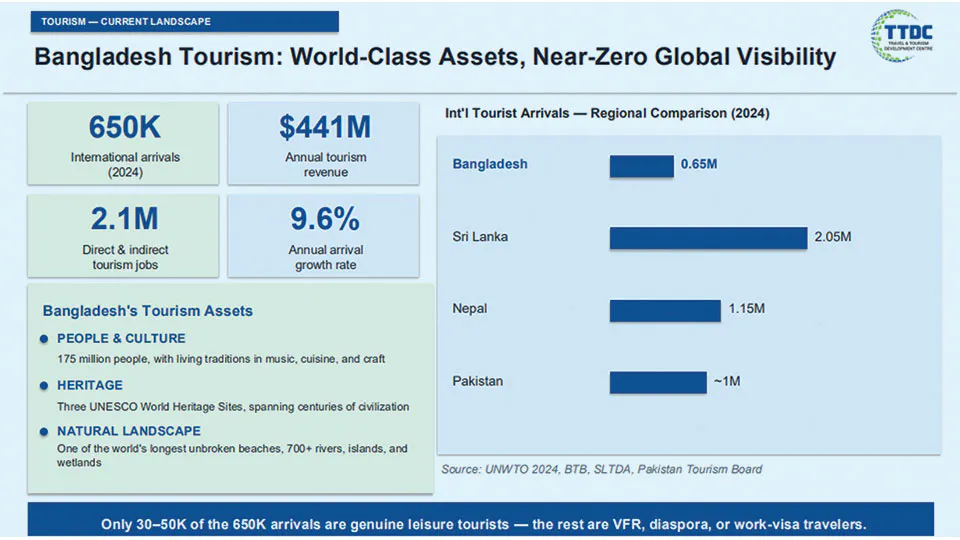
has about 175 million people, three UNESCO World Heritage Sites, one of the
world's longest unbroken sea beaches, more than 700 rivers, islands, and
wetlands, as well as diverse traditions in music, food, and crafts.
Yet
the country recorded about 650,000 international arrivals in 2024, compared
with 2.05 million in Sri Lanka, around 1 million in Pakistan and 1.15 million
in Nepal.
TTDC
estimates that only 30,000-50,000 of Bangla-desh's arrivals were genuine
leisure tourists, with most others comprising visiting friends and relatives,
diaspora, and work-visa travelers.
Branding,
visa reform
The blueprint identifies the absence of a sustained national tourism brand as a major weakness. Earlier initiatives such as "Beautiful Bangladesh" created promotional identities but failed to establish consistent positioning.
 Sadia Haque
Bangladesh
also spends less than USD 1 million annually on tourism promotion, compared
with an estimated USD 8-15 million in Sri Lanka, it said.
Visa
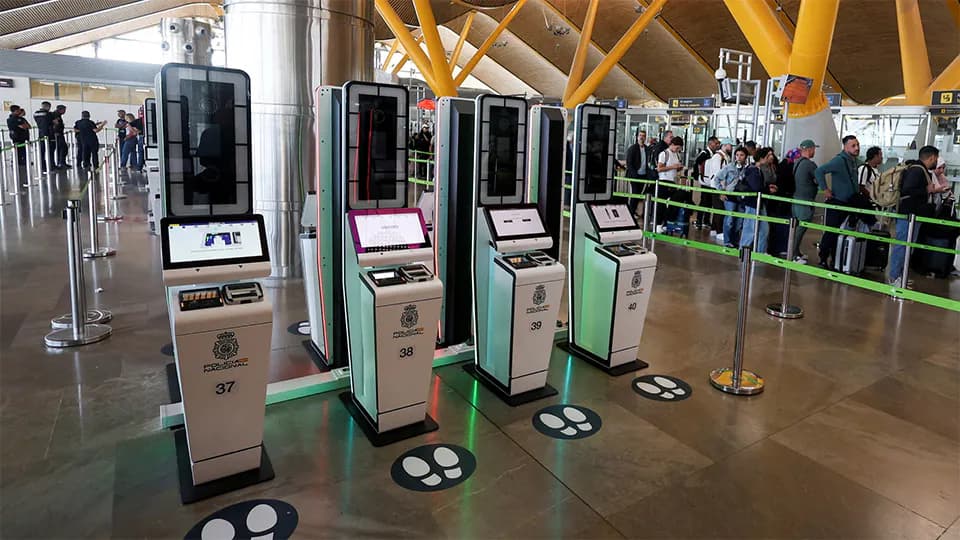
procedures are another obstacle. Bangladesh does not currently have an e-visa
system, while visa-on-arrival services at Hazrat Shahjalal International
Airport need improvement. TTDC has proposed e-visas, better visa-on-arrival
services, and expanded facilities at land borders.
The
organization also wants Bangladesh to develop commercially bookable
"Sig-nature Tourism Circuits" that can be marketed through
international travel channels.
Ambitious
growth targets
TTDC
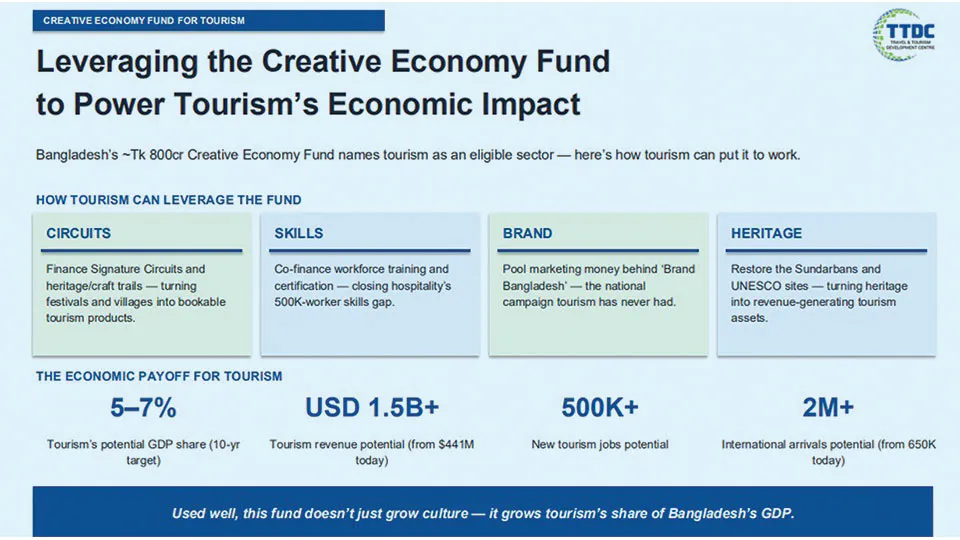
aims to raise international arrivals to 1.2 million within three to five years,
followed by more than two million arrivals and USD 1.5 billion in tourism
revenue within a decade.
The
blueprint also targets a 5-7 percent contribution to GDP from tourism and more
than 500,000 additional jobs over the longer term.
Hospitality,
workforce gaps
The hospitality sector also requires major investment. While Bangladesh has more than 3,000 registered hotels and resorts, branded three- and four-star properties remain scarce outside Dhaka, including in major destinations such as Cox's Bazar.
TTDC
estimates that more than 500,000 additional skilled workers will be needed by
2030. It proposes expanding hospitality training and certification, with a
long-term goal of producing 100,000 certified hospitality workers by 2035.
Eco-tourism,
aviation
The
blueprint identifies the Sundarbans, Sylhet, Kuakata, North Bengal, and the
Chittagong region as areas with significant eco-tourism potential. It calls for
environmentally responsible development and a commercially viable eco-tourism
model for the Sundarbans.
Aviation
is another key pillar. Bangladesh's aviation sector contributes an estimated
USD 5.3 billion to GDP and supports about 475,000 jobs. However, around 80
percent of air traffic is carried by foreign airlines, according to TTDC.
The
organization proposes expanding bilateral air-service agreements, improving the
role of Bangladeshi carriers and developing Cox's Bazar as an international
aviation hub.
Dhaka
as transit hub
TTDC
also sees an opportunity to turn Dhaka into a South Asian transit hub through
e-transit visas, online pre-clearance, improved airport facilities, better
airport-city connectivity and stopover programs.
The
blueprint also calls for stronger cargo transshipment through Dhaka and
development of meetings, incentives, conferences, and exhibitions (MICE)
tourism.
TTDC
further proposes using Bangladesh's approximately BDT 800 crore Creative
Economy Fund to support heritage and craft trails, tourism marketing, workforce
development, tourism circuits, and conservation of heritage sites.
The
organization has called for coordinated action among government agencies,
airlines, hotels, tour operators, investors, media, and content creators to
establish tourism as a national development priority.
"Bangladesh
doesn't lack the assets - it lacks the coordinated strategy, investment, and
institutional home to leverage them," the blueprint states.