

India eyes strategic stake in Sri Lanka's Mattala Airport

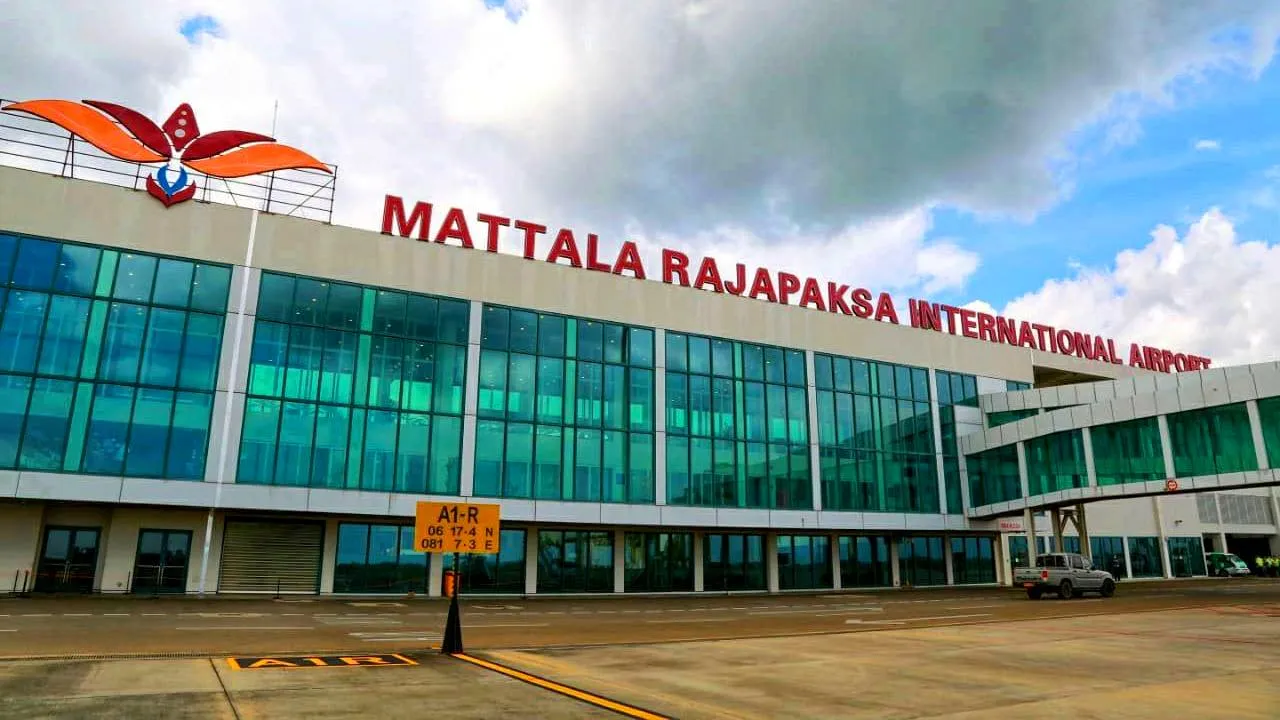
Dhaka: India is closely watching Sri Lanka's move to invite foreign investors to take control of the Mattala Rajapaksa International Airport (MRIA) near the China-controlled Hambantota port, viewing it as a rare strategic opportunity in the Indian Ocean region.
The Sri Lankan government has issued an Expression of Interest (EoI), inviting domestic and international investors to manage and develop MRIA under a 30-year build-operate-transfer (BOT) model.
Located roughly 250 km from the capital Colombo, MRIA was launched in 2013 at a cost of USD 209 million, largely funded by China's Export-Import Bank. Despite a modern terminal and a 3,500-meter runway, it failed to attract meaningful air traffic and earned the reputation of being the world's emptiest airport.
The EoI outlines two independent investment tracks. The first covers aerodrome operations through a management contract, requiring bidders to have a minimum of five years of aviation experience or operation of at least one international airport handling over one million passengers annually.
The second track covers landside operations under the 30-year BOT lease, offering development rights over 238 hectares of land. Potential uses include maintenance, repair, and overhaul (MRO) facilities; a flying school; logistics parks; solar installations; industrial parks; and resort hotels.
Investors may participate in either track independently or pursue both, providing flexibility to build a diversified portfolio.
India's interest is driven by both strategic and commercial considerations. New Delhi has been concerned about China's growing footprint in Sri Lanka since 2017, when Beijing secured a 99-year lease over the Hambantota port.
Officials familiar with the matter described an Indian presence at Mattala as a tangible expression of India's Neighborhood First policy and its Vision MAHASAGAR commitment to the Indian Ocean region.
On the commercial side, India's MRO sector is under considerable capacity pressure as the country operates the world's fastest-growing aviation market. MRIA's long runways, uncongested airspace, and generous land area make it a natural candidate for an MRO hub serving Indian carriers, potentially cutting turnaround times and costs.
The uncongested airspace also makes MRIA attractive as a pilot training base, since training capacity within India is increasingly strained.
India-Sri Lanka ties have been on an upswing following Indian Prime Minister Narendra Modi's visit to the island nation in April last year, with both sides seeking deeper trade and strategic cooperation.
A previous attempt to lease MRIA to an Indo-Russian joint venture anchored by Shaurya Aeronautics Pvt. Ltd. came close to completion under Sri Lanka's prior government but ultimately fell through following a change in administration.
Officials view the current EoI as a clean slate, with the strategic rationale now arguably stronger than before.
V