

Export cargo security capacity gets major boost as EDD reinstated in Dhaka Airport
Second EDS activated in Sylhet


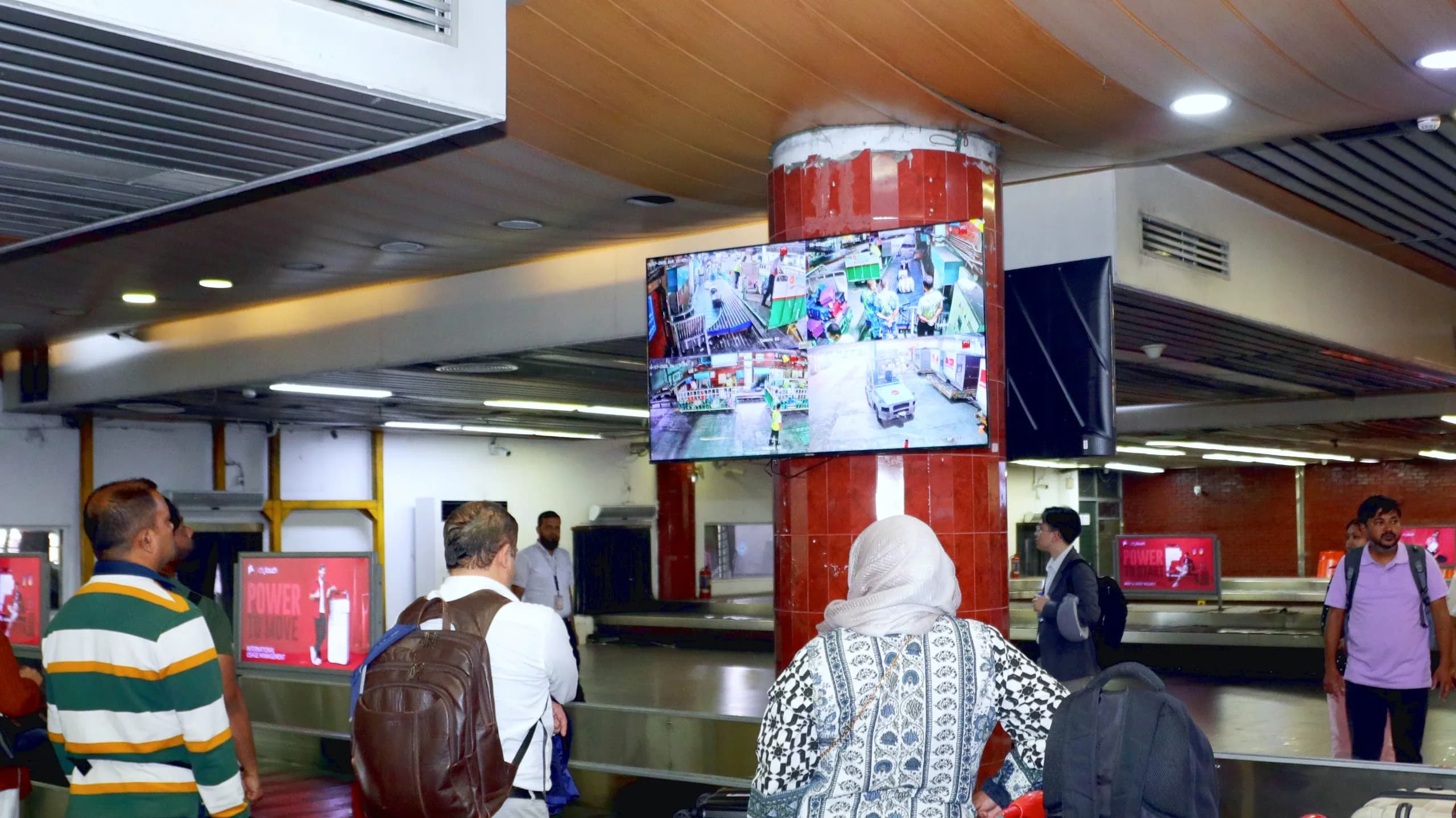
Dhaka: Bangladesh has significantly strengthened its export cargo security screening capacity at its international airports following a series of coordinated initiatives undertaken by the Civil Aviation Authority of Bangladesh (CAAB).
Under the latest development, approval has been reinstated for the use of Explosive Detection Dog (EDD) screening for direct UK-bound export cargo at Hazrat Shahjalal International Airport, according to a press release from the CAAB. The move is expected to further align Bangladesh’s cargo security regime with international standards and enhance confidence among exporters and international partners.
Officials said the reinstatement of EDD screening for cargo destined for the United Kingdom will make the security verification process more reliable and efficient, reducing the risk of delays and additional re-screening requirements. The development is also expected to support faster direct cargo transportation while helping exporters cut both time and operational costs.
At the same time, export cargo screening operations at Osmani International Airport in Sylhet have received a major boost with the activation of a second Explosive Detection System (EDS). The additional EDS unit is expected to significantly increase screening capacity, ensuring faster, uninterrupted, and more efficient cargo processing.
According to CAAB, the enhanced screening capability at Sylhet airport will reduce cargo handling time, improve operational efficiency, and strengthen compliance with international aviation security standards. The increased capacity will also help authorities manage growing export pressure while ensuring greater convenience and confidence for exporters.
Bangladesh first achieved the 3rd Country EU Aviation Security Validated Regulated Agent (RA3) Validation for Hazrat Shahjalal International Airport in 2017, enabling direct export cargo shipments to the European Union and the United Kingdom. Under the validation framework, four screening methods — EDS, X-ray, Explosive Trace Detection (ETD), and EDD — have been used for export cargo security checks.
However, in 2021, the UK’s Department for Transport (DfT) temporarily suspended approval for the use of EDD screening for direct UK-bound cargo shipments. CAAB said the approval has now been restored following sustained diplomatic and technical engagement with the DfT and European Union experts.
With the reinstatement, all four screening methods — EDS, X-ray, ETD, and EDD — are now fully operational again at Hazrat Shahjalal International Airport. Authorities expect the development to make cargo screening procedures easier, faster, and more effective.
CAAB also said more airlines are now expected to pursue Air Carrier Carrying Air Cargo and Mail from Third Country Airport to European Countries (ACC3) validation, enabling them to operate direct cargo transportation services to Europe.
Meanwhile, Osmani International Airport obtained RA3 Validation in 2021, allowing direct export cargo operations to the EU and UK markets. Although cargo operations were suspended temporarily for a period, regular services resumed in April 2025.
The airport had already been conducting screening operations through EDS, X-ray, and ETD systems. The addition of the second EDS has now substantially expanded its operational capability, officials said.
Authorities added that several airlines have already shown interest in obtaining ACC3 validation for operations from Sylhet, creating new opportunities for large-scale direct export cargo transportation from the region. The move is expected to play an important role in expanding Bangladesh’s international trade and export connectivity.