

Bangladesh's floating school initiative gets UNESCO recognition

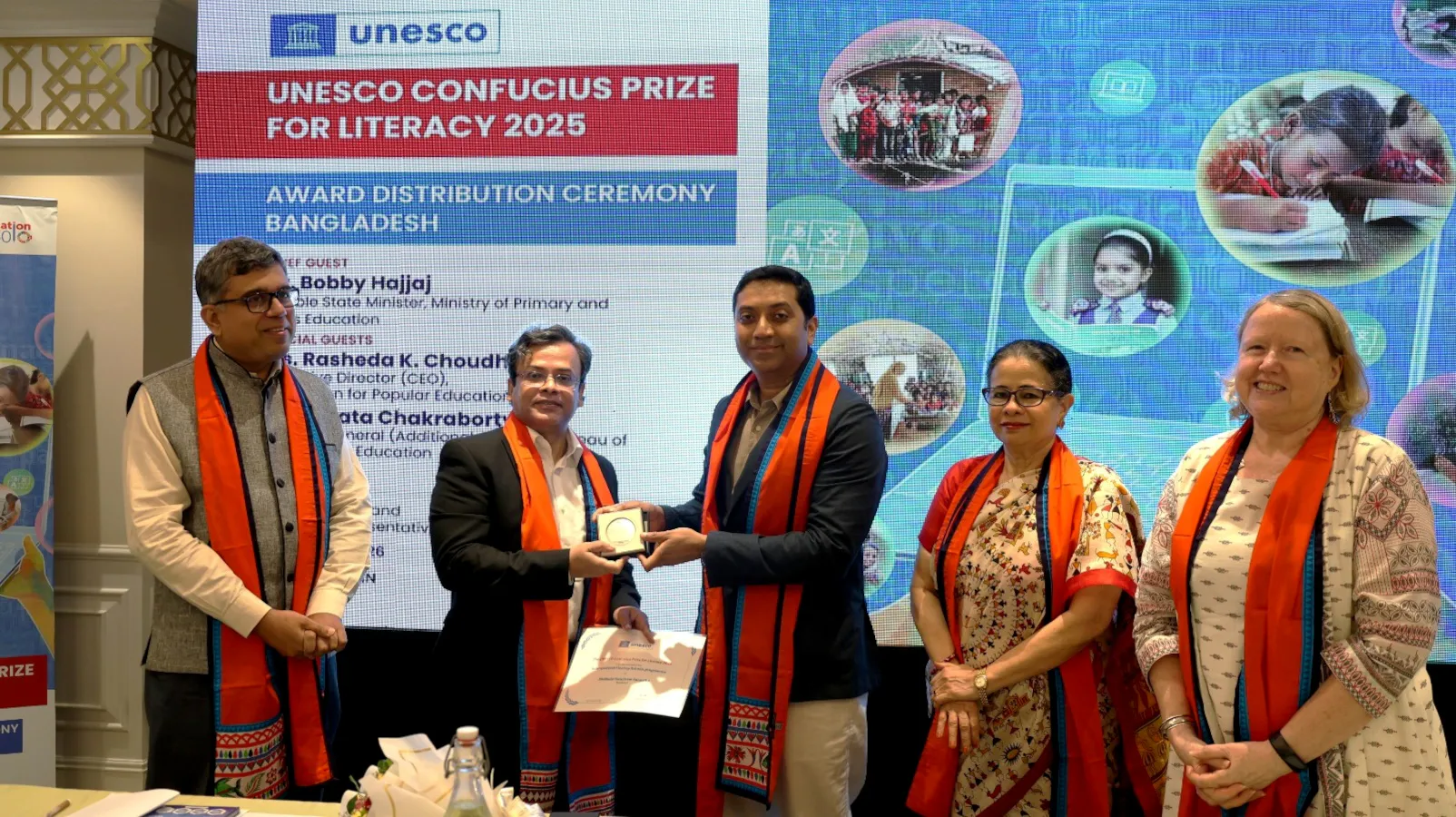
Dhaka: Bangladesh's Sidhulai Swanirvar Sangstha on June 10 formally received the UNESCO Confucius Literacy Prize 2025 in recognition of its pioneering solar-powered floating school initiative that provides education to communities in the Chalan Beel wetlands.
The award was presented at a ceremony organized by UNESCO Dhaka, with State Minister for Primary and Mass Education Bobby Hajjaj attending as the chief guest, read a press release.
Special guests included Devabrata Chakraborty, Director General (Additional Charge) of the Bureau of Non-Formal Education (BNFE), and Rasheda K. Choudhury, Executive Director (CEO) of Campaign for Popular Education (CAMPE). The event was chaired by UNESCO Representative to Bangladesh Dr. Susan Vize.
Addressing the ceremony, Bobby Hajjaj highlighted the importance of innovative education models for climate-vulnerable and hard-to-reach areas.
"Ensuring access to quality education for every child remains our commitment. In climate-vulnerable and remote areas, locally adapted solutions are particularly important. Such initiatives expand educational inclusion and equip future generations with the knowledge and confidence they need to thrive," he said.
Sidhulai Swanirvar Sangstha was selected as one of three global recipients of the UNESCO Confucius Literacy Prize 2025, alongside Ireland's National Adult Literacy Agency (NALA) and Morocco's Ministry of Education. The award recognizes innovative literacy programs supporting rural communities and out-of-school youth.
Dr. Susan Vize underscored the transformative role of literacy in building inclusive and resilient societies, saying literacy empowers people to make informed decisions, seize opportunities, and participate actively in society.
The organization's floating school project operates across the waterways of Chalan Beel, Bangladesh's largest wetland system, where poor transport infrastructure often prevents children from attending school, particularly during the monsoon season.
Its classrooms are housed on boats equipped with solar power systems and built using local boatbuilding expertise. The organization currently operates 56 boats, including 26 floating classrooms, 10 libraries and computer labs, and eight training centers, while the remaining vessels provide healthcare, playground, and transportation services.
Executive Director Architect Mohammed Rezwan said the recognition reflected the collective efforts of people working in remote communities.
"We believe those who face challenges every day often hold the most effective solutions. This recognition is a tribute to their efforts and an inspiration to reach even more people in the years ahead," he said.
Established in 1967, the UNESCO International Literacy Prizes recognize excellence and innovation in literacy initiatives worldwide. Supported by the People's Republic of China, the UNESCO Confucius Literacy Prize is awarded annually to three organizations and carries a prize of USD 30,000.
Bangladesh previously received the honor through Friendship in 2023 and Dhaka Ahsania Mission in 2013.